A collaborative megadungeon experiment for the Classic Adventure Gaming community
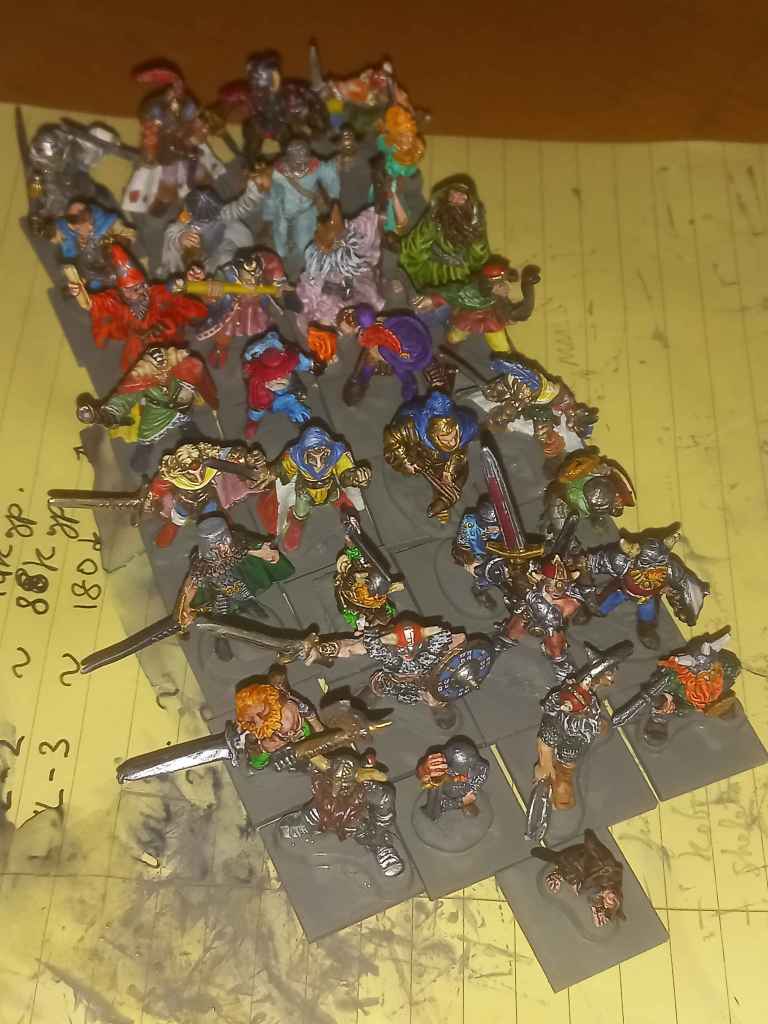
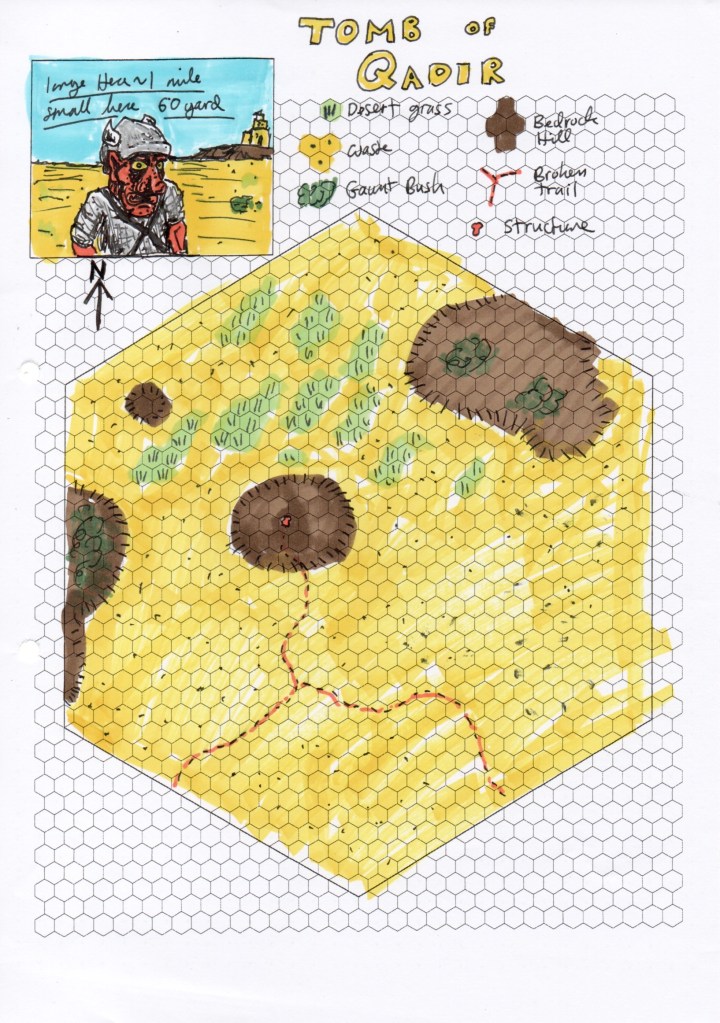
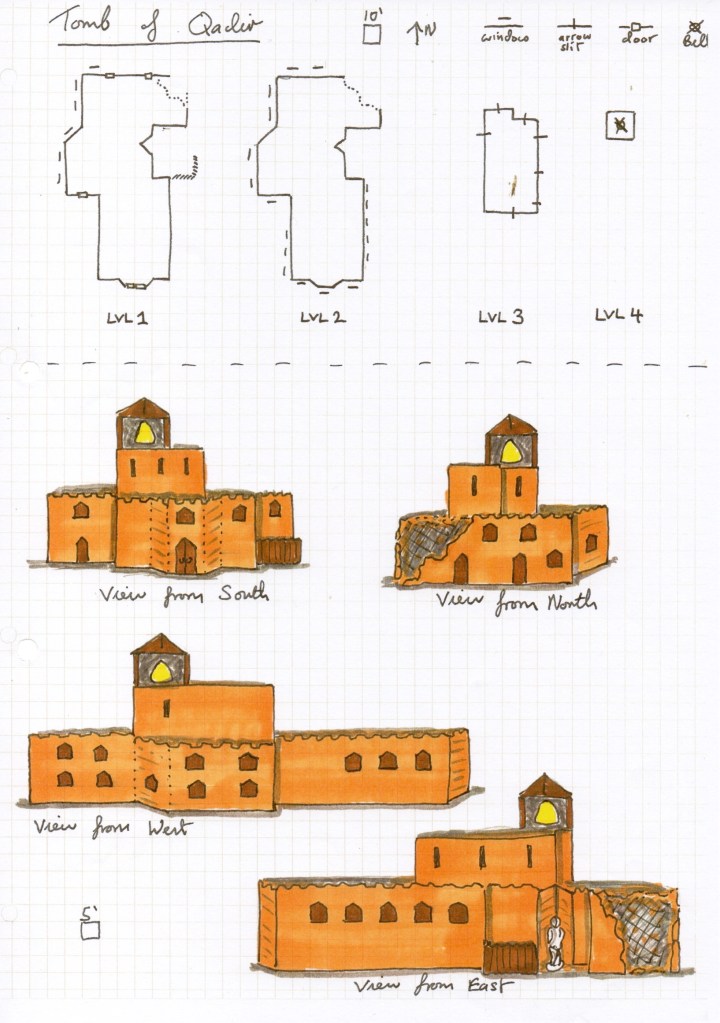
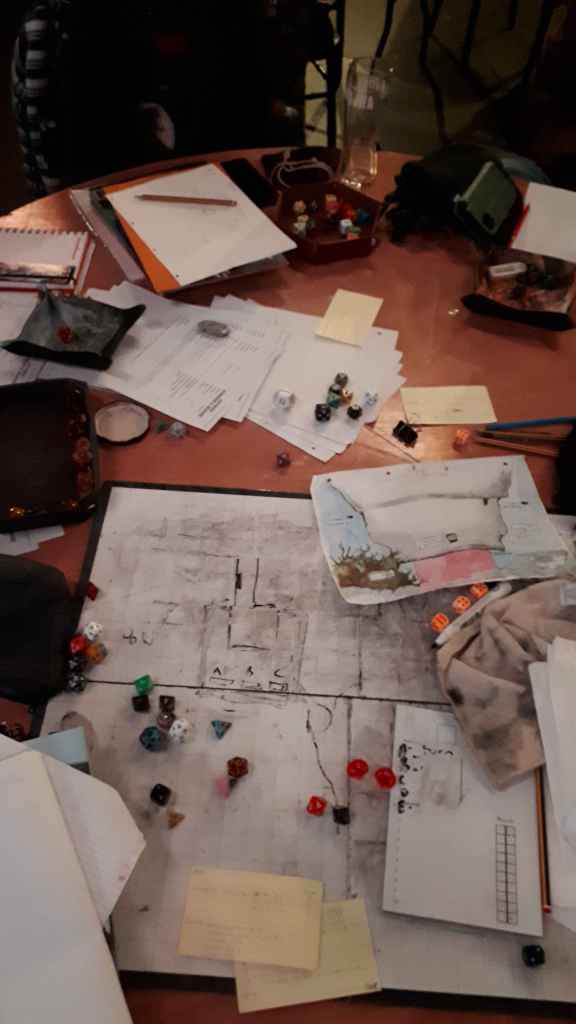
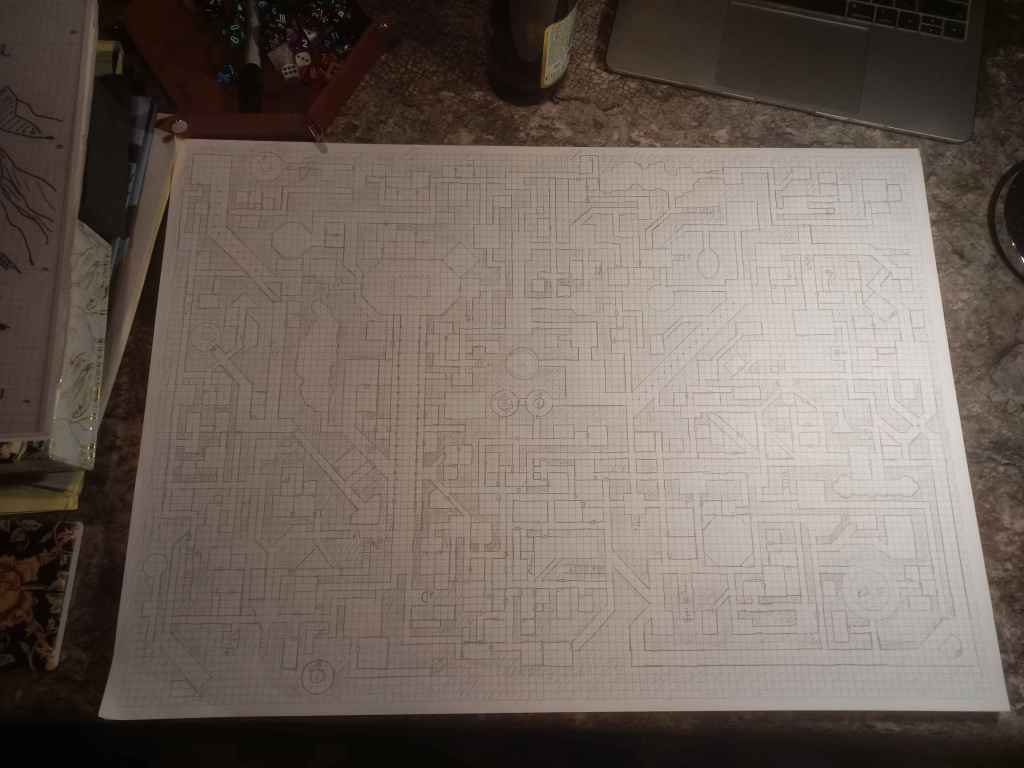
I’ve been mucking around with Gary’s Appendix A and a large pad of A2 sized graph paper. What started out as a bit of fun generated something that looked particularly interesting. Particularly gameable. Perhaps the first level in a massive AD&D megadungeon.
Once this was created and I surveyed the size of it, I soon found that I wouldn’t have nearly enough time to key all these rooms. The map sat on my desk for a little while before I had a bit of a brainwave. Perhaps I didn’t have to key this beast alone. After speaking to GusB from the Classic Adventure Game Podcast, I thought I would ask members of the CAG community to have a crack at keying this beast and see what they could come up with!
And so, I’m launching a project that I hope will be both fun and useful for the wider Fantasy Adventure Gaming community: to create Level One beneath Castle CrAG.
This will be a collaborative design effort, where contributors submit keyed rooms that I will then collate, edit, organise, and publish as a complete AD&D/OSRIC-compatible dungeon level. Once the text for this level is finished, it will be placed within my existing campaign world and immediately put into play for testing.
I’ve already begun sketching out the lower levels of the megadungeon, and I’ll soon begin inking Level One — so this is the perfect time for the community to jump in and help bring it to life.
What This Project Is About
The goal is simple: To create a massive and classic AD&D Dungeon Level for the community, by the community.
This will be published as a free resource for others running AD&D or OSRIC.
Castle CrAG: What is it?
The concept of Castle CrAG torn from the heart of Adventure gaming: the Megadungeon below a Castle. This goes back to the formation of the hobby. The linchpin of any Fantasy Adventure Campaign is the multi-level, multi-themed, multi-faction, megadungeon. Think of Castle Greyhawk and Castle Blackmoor. It is something that can sit within a days journey from your campaign’s central city, somewhere PCs of any level can go to delve and gain treasure. A place ripe for adventure.
For the moment we will be focussing on Level One of the megadungeon. A sort of litmus test to see if the project is feasible.
The THEME of Level one is FACTION WARFARE.
The dungeon itself sits below a Ruined Castle constructed during the darkest recesses of antiquity, and is famed for its evil and corrupting influence. The castle ruin proper is currently controlled by a high level magic user and their army of goblins. But this MU has been poisoned through assassination, and their grip on the castle wains. This is by design, for control of the castle ruin is in constant flux.
There are powers in the lower levels of the dungeon who manipulate the monsters of level one, and the castle ruin. They draw them forth en mass, with dark offers and promises. They encourage open warfare for supremacy of the level; for each Winter Solstice, a herald of the powers below – a powerful Anti-Cleric named Kal-Thule – ascends the great staircase (Key 1) to gift the supreme power of level one with a magical item of power. With this, they are granted licence to capture the castle ruin above and hold it for another Solar Year. By this scheme, the powers below have attempted to guard and obscure their plots with a layer of brutal and scheming upstarts.
The agents of this lower power gain passage through the dungeon with the presentation of a yellow rune, one that all come to respect and fear, for challenging it’s right spells doom.
The nature of these lower powers, and their machinations, are currently not the focus of the project, but they should certainly be in your mind as you design the your factions and denizens.
The ARCHITECTURE of Level one is as follows:
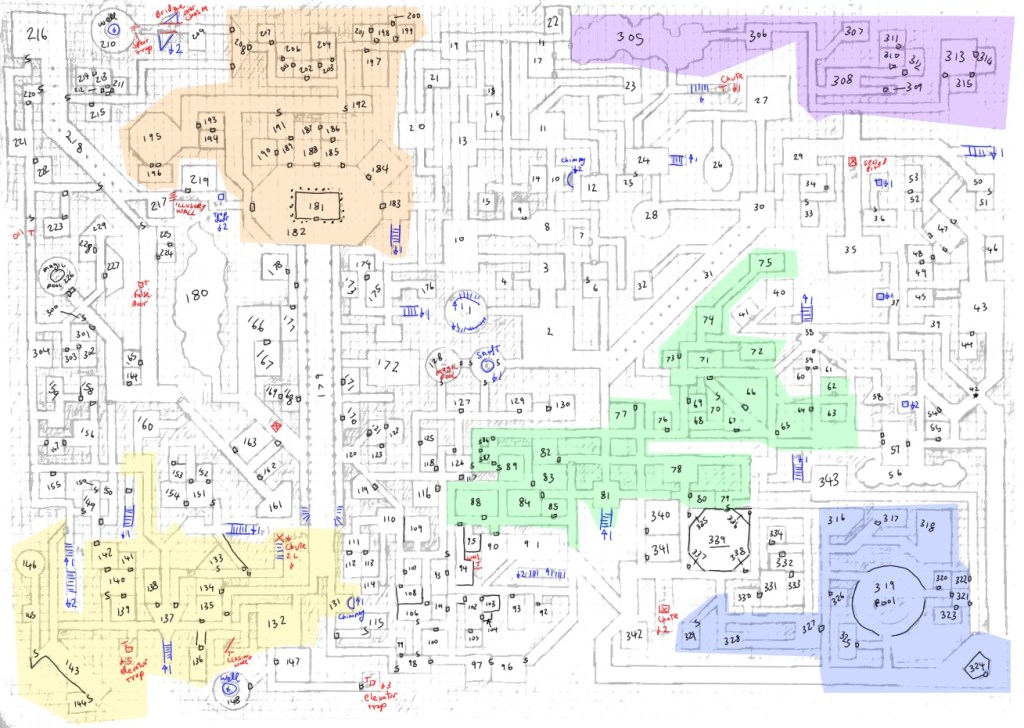
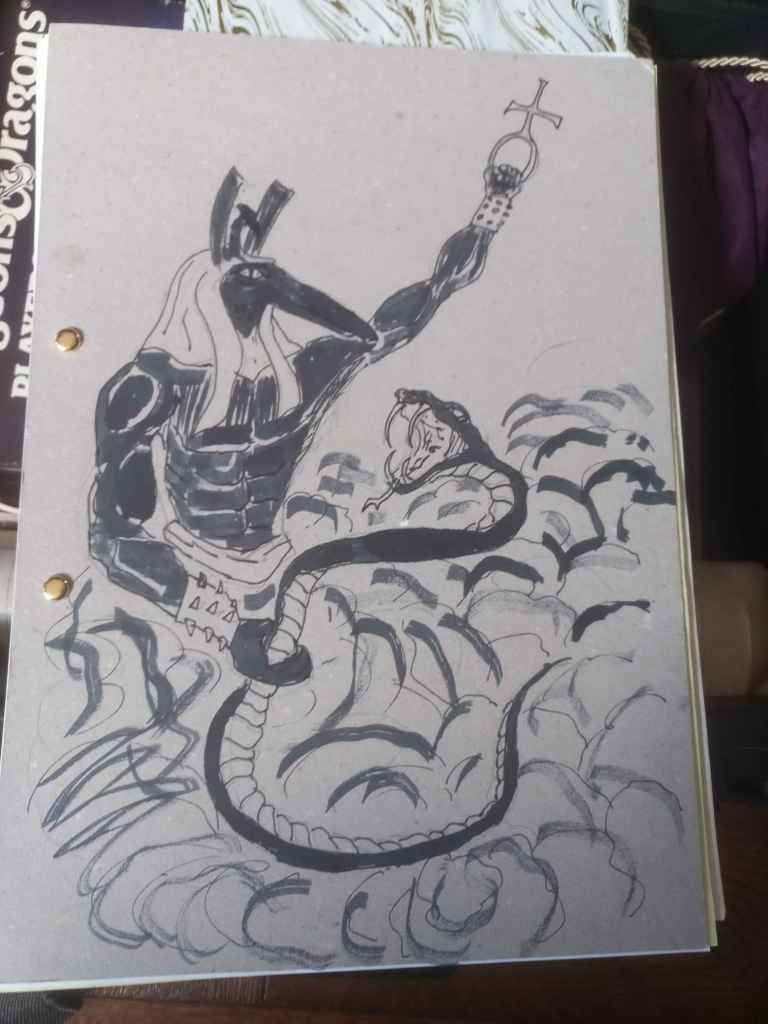
The North West quarter of the map is the FORGOTTEN HALL OF THE FACELESS ONE. This area was once a temple complex dedicated to Nyarlethotep in his form as the Faceless Pharaoh. Though perhaps no cult currently resides here, his statutory may still be present, even if defiled and forgotten. Corridors are generally 20’ tall and made of cleanly cut granite blocks. Arches are square and pillared in the Egyptian style.
the North East quarter of the map is the QUILL SECTOR. Long ago this was an administratum, but most remnants have been smashed away during constant battles through the years. There may still be some evidence of bureaucrat veneration, though perhaps graffiti mocks this openly. The corridors are generally 10’ tall and walls are barely covered with an ancient plaster, fallen to ruin. Arches are vaulted and capped with the brooding faces of scholars long forgotten.
The South West quarter of the map is the HOLLOW OF FORGOTTEN TRUTHS. Long ago this was some sort of reeducation centre. There are hints that an elemental cult or Old Way Druid faction overtook the area and constructed elaborate testing rituals here, but what they were have been lost to the sands of time. Constant war has blanched much of that away. Walls are rough and often constructed of field stone, the ceilings are 15’ tall.
The South East of the map is the BLEAK BARRACK. Warrior veneration and tableau’s of black mailed warriors are generally scattered throughout. Alcoves with black candle sconces offer prayers to long forgotten dark warriors, as are their charnel reliquaries. Ceilings are 20’ tall but vaulted. The walls are generally constructed of small bricks and archways are vaulted with capstones of gargoyle faces.
The central area around Key 1 are hewn from large basalt blocks, and much foot traffic and evidence of passage are always found.
Project Guidelines
To keep everything consistent and faithful to the old-school spirit, I’ve established a few ground rules:
1. No AI Use
All contributions must be entirely human-made.
2. Greyhawk-Compatible Tone
The dungeon should match the assumptions of AD&D’s implied setting:
Fantastical medieval culture
Sword & Sorcery atmosphere
Classic monsters, magic, and treasure
Nothing too gonzo, sci-fi, or anachronistic. No new monsters.
3. Dungeon Level One
If Castle CrAG is a successful project, there may be more levels in the future, a true megadungeon. But for now we will focus on Level One and see what evolves. When you submit your room keys, please keep monsters, traps, tricks, and treasure appropriate for low-level adventuring. Don’t worry — higher levels will come later.
4. Licensing & Rights
By submitting a room, you agree to allow me to edit and publish your work . I will publish Castle CrAG under a CC BY-NC-ND 4.0 licence.
This means:
You will be credited as the author of your room.
The finished dungeon may be shared for free, anywhere.
No one may sell it or alter the final document.
My editing is for purposes of consistency, clarity, and layout only.
This keeps the project non-commercial, free to the community, and protected from misuse.
How to Contribute
If you’d like to participate, simply fill out the submission form:
The form will send the data to a spreadsheet that can be viewed in real time. This means that submitters can see what keys are free before starting to write and we can avoid duplicate keys.
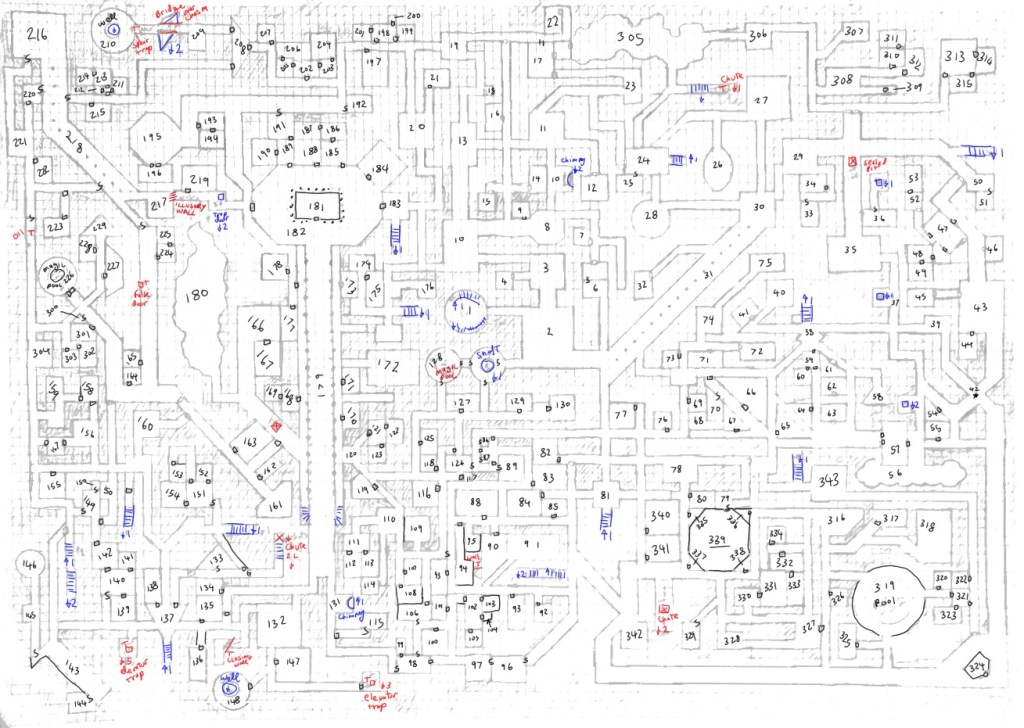
There are plenty of rooms open — and I’d love to see the creativity of the CAG community shape this doomed, ancient place. Here are the roughly numbered maps. The Map with colours show faction areas of control:
I can’t wait to see what the community contributes — and I’m looking forward to bringing your ideas to life on the page, inked and ready for the next band of adventurers.
Oh, and Dungeon Levels need empty rooms too! Don’t forget to submit them.
The dawn arrived on Saturday, and shortly after a few bells tolled in the courtyard of Hofraithe Park. I rushed down from my room for a speedy continental breakfast and a few swigs of coffee. Gaming was due to occur shortly.
The sign-up method at Cauldron is fairly unique. Game slots are released just before they are due to start. A large queue forms at the registration table, and this year the queue took up the whole entrance foyer and hallway of the building. This sign-up method has many merits and is preferable to pre-ticketing (which is what most conventions I’ve attended use). The problems are still the same, however — some desperate attendants will camp for the registration sheets to “release”. This is only natural with any finite resource, but it can be slightly wearisome. If I were to attempt to correct this behaviour, I would have three sign-up tables, three queues, and all registration sheets dispatched simultaneously without any foreknowledge by the attendants of which games they are queuing for. I think this would dampen the camping behaviour, though not eliminate it. Regardless, I camped the line early like a desperate schmuck, and managed to get a seat at a fantastic game.
SATURDAY BLOCK 1: The Blue Mausoleum
Eight brave souls turned up for Gabor Lux’s AD&D dungeon. We picked from pre-gen PCs; I chose a 4th-level Cleric and named him Osmund. Gabor outlined the dungeon’s history: once an imperial necropolis, long fallen to ruin, treasures still buried within. I loaded up on combat spells with a touch of utility.
He gave us two treasure maps: one marked “Lair of the Carnivorous Devourer,” the other a riddle of family names and crypts. Attronarch mapped. There was no caller.
We set off and descended a pillared foyer where skeletal statues held out stony palms. GusB, our thief, dropped a few coins into one hand; the statue’s fist closed, and the coins vanished. We advance, underpaying apparently, because searing rays blasted from the statues’ eyes and frazzled us.
Below, a vast chamber opened, corridors yawning from every wall and a pit at its centre. Thirty feet down, our light caught shattered statuary. Our treasure map hinted at a “pit in the ceiling.” Gabor shrugged when asked him to clarify if this was so, so instead we trusted our gut and set about descending the pit.
Pitons hammered, ropes loose, we descended into another hall, equally vast. Exploring the maze was a joy: twisting halls, stacked chambers, stone doors at every turn, a dungeoneer’s dream. A chamber littered with wisps of black silk appeared next. Expecting spiders, GusB crept ahead while we braced spears in the hallways behind him. Instead—a warped caterpillar-man lunged, hungry for our flesh. We offered peace; his reaction roll said no. He rushed us, met our spears, and we robbed him of life. The creature’s lair held husks of deformed men in black robes. Cultists, likely. We pressed on, knowing now our potential foe.
By now we were hitting our stride with the exploration. Whizzing through rooms and taking careful glances here and there.
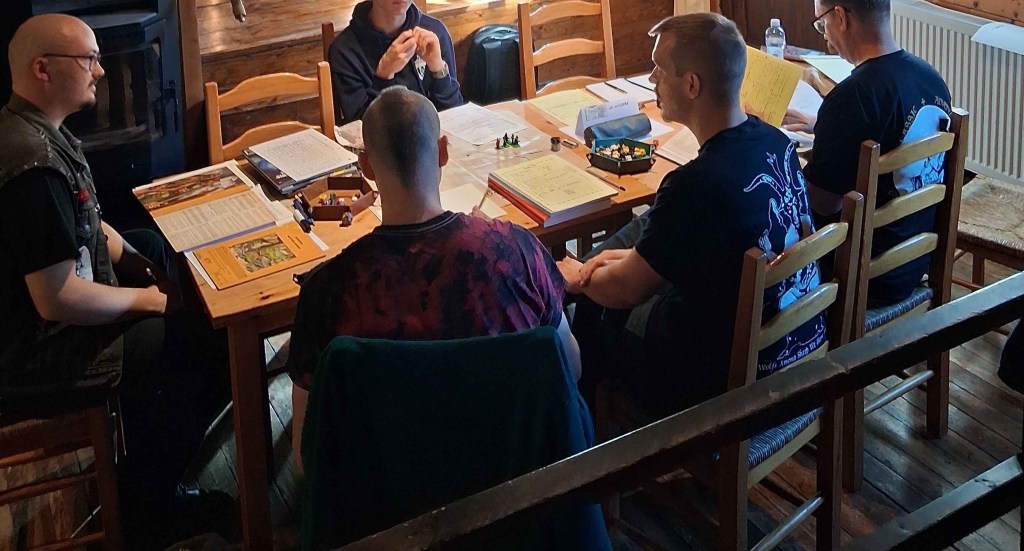
Photo by GusB
One vault’s threshold lay guarded by dragon statues spouting Greek fire. Another, a sunken black-tiled room our Augury promised would bring great woe. We found a secret door into far more ancient portion of the dungeon, and Attronarch’s map began to bloom with interlocking levels.
My favourite encounter was a mad dwarf archivist hoarding “treasures” of junk. After some persuasion, he shared useful lore including directions to a cult temple (not the one from our map, we later learned) and a warning of the “black chamber of woe,” which was home to a faceless sphinx statue. Pure Lovecraft. We pushed on.
At the temple, degenerate cultists attacked. I tried to halt their retreat with Hold Person spell but one made its save and escaped for reinforcements. The hoard approached.
We withdrew into a tight corridor, bracing for the charge. A hand grenade felled many of the degenerate cultists. We surveyed our map, and intuited a potential flanking manoeuvre about to hit us. I cast Protection from Evil on Attronarch’s fighter, who made a desperate rear-guard stand and saved us. The fight was brutal, but we emerged victorious, treasure-laden and miraculously alive.
What a game. Everyone was on fire, and Gabor ran it masterfully. This is what adventure gaming should be. The dungeon’s verticality especially inspired me. Back in England, I began designing my own eight-level dungeon, full of up-and-down interconnections.
Keep an eye out for The Blue Mausoleum—it should see an E.M.D.T. release soon!
SATURDAY BLOCK 2: The Setian Vault
This time I was behind the screen, running another dungeon from my milieu. It was the second time I’ve run it at a convention (the first being Owlbear and Wizard’s Staff). This delve went quite differently from previous play-throughs—and expertly by the players.
The Party
Alex – Maelros Thum-Kelveth, Human MU 3
Bäxta – Emeric de Sablecroix, Human Paladin 3
Attronarch – Gravek, Human Ranger 3
GusB – Feyric, Human Druid 3
Misa – Wallace, Human Fighter 3
The players heard rumours: beneath Adder Hill lay a cave system and a strange statue. Local children dared each other to approach it—until a few weeks ago, when some found a glowing portal flanked by golden wands. Whispers also told of a temptress luring men to the caves, and livestock turning up mutilated.
Wallace was a crossover from a previous game at the con (one of Grutzi’s, I believe)—an unexpected but welcome addition. After selecting spells and marching order, they descended into the caves. Bäxta mapped.
Early on they met a giant snake. GusB cast Speak with Snakes, revealing a beast far more intelligent than expected, one that claimed to know how to walk on legs. Very odd. The group prodded and provoked it until it struck. Wallace was briefly constricted, but the party cut it down.
Beyond the lair they found a concealed door leading into a smooth water chute. After testing the slick tunnel, Attronarch sent his ranger down first, where faint light glowed ahead. The rest followed and entered a secret chamber holding a glowing triskelion monolith and a withered figure in a green robe seated on a bronze chest.
It didn’t register as evil—oddly enough—and rose creaking to speak. The undead being offered a bargain: within its chest lay a weapon that could destroy the Ophidian Font, a fountain said to turn men into snakes. The weapon—a reptile-slaying longsword—could end the corruption if driven into the fountain’s maw. In return, it demanded a draught of life essence from the swordsman.
I gave it my best Hannibal Lecter impression, which earned some laughs. Bäxta, as the stalwart paladin, agreed and sacrificed one life level in exchange for the blade.
They rode the water chute further down, reaching a bronze grate blocking the way. GusB cleverly used Stone Shape to loosen the frame, and with a few solid kicks it gave way. Below lay a watery tomb, sarcophagi at the base of a waterfall, glowing runes scattered across it.
Rather than disturb the grave, they pressed on. A Dancing Lights trap spell triggered a Magic Mouth. The light took the shape of a fiery man and announced via the mouth: “Dare ye come forth to accept the Geas of Flame?” The group called its bluff and entered. Inside stood a stone statue wearing a fine cloak—until they touched it. It animated, but was mercifully slow; they hid until it crumbled to dust.
Next, they found a door with an intricate locking mechanism. Being on the inside of the vault they could open the mechanism easily. The door swung in and revealed a petrified halfling—likely a thief who’d tried his luck from the other side.
Now in the dungeon proper, they pushed through tricks, traps, and ambushes. At one point snake-children—small serpent-folk that spat poison—flanked them. After several battles they finally reached the Ophidian Font. Knowing their enemy’s habits, Alex sent Dancing Lights down the corridor as bait. The snake-children charged out from a secret door, fooled by the alteration, and were quickly cut down.
Emeric advanced and drove the serpent-slaying sword into the cobra-shaped fountain’s maw. The Font exploded in a burst of light—evil vanquished.
On the way out they revisited the undead druid. Delighted with their victory, he returned twice the life essence he had taken before collapsing into dust.
A brilliant session. This crew utterly devastated the Setian Vault with precision and cunning. Though they never met the dungeon’s new mistress, they ended the power behind her reign. Down with Set!
I’ve submitted The Setian Vault to Fight On! Magazine—it should appear in one of the next issues if you’d like to run it yourself.
SATURDAY BLOCK 3: Attronarch’s Wilderlands
After dinner there was a live auction. I bought myself some nice Otherworld Miniatures but little else. All manner of treasures were being bid on, including a Collector’s Edition White Box and an absolutely massive Mystara haul. Cauldron is the place to go if you want to snag a rare slice of D&D history.
Then word began to ripple across the convention: a sign-up sheet had appeared with space for more than twenty participants. Twenty? Yes, twenty. Cauldron was about to get properly old school, because the mighty Attronarch had offered up a gigantic OD&D game. Even better, the session was going to be canonical within his long-running Wilderlands campaign, which is sitting at around 150 sessions as I write this.
As a long-time on-and-off player in Attronarch’s campaign, I was really looking forward to gaming with him again, and with the other regular players who had come to Cauldron. All of us regulars were gifted t-shirts printed with the iconic line, “Die like it’s Fucking 70’s,” which appears on his player-recruitment posters. We pulled them on and took a corner of the large three-table gaming space. This was the first time I’d rolled dice with many of these guys in person, including Attronarch, so I was genuinely excited.
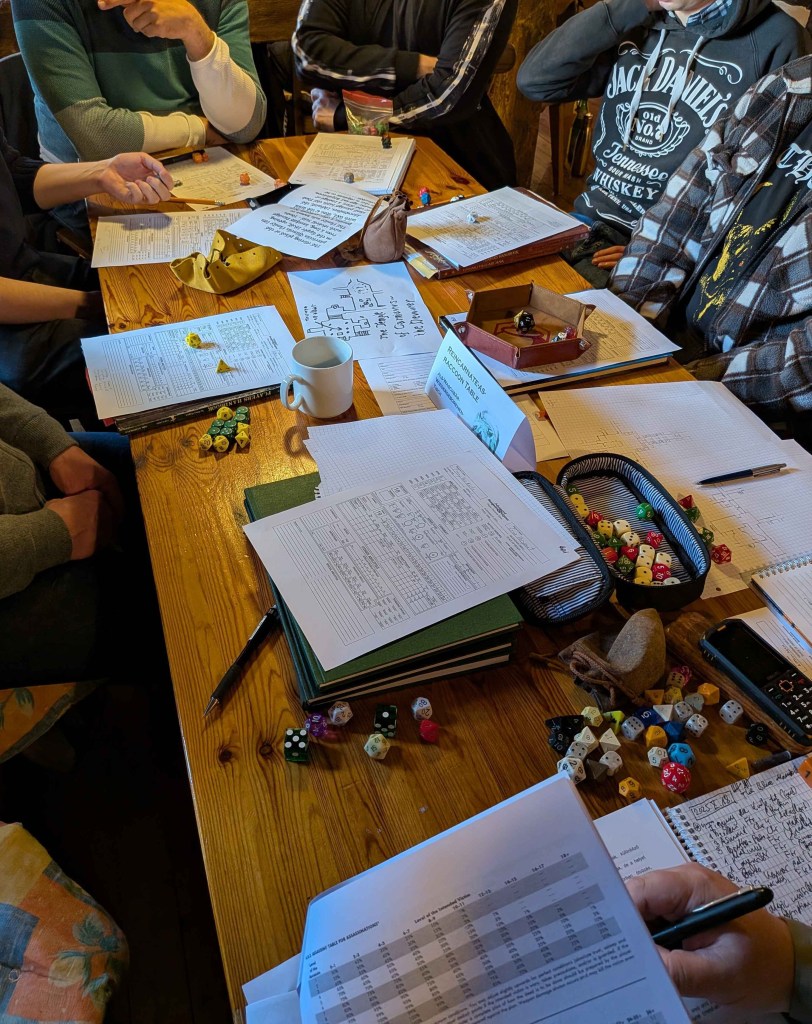
Photo by GusB
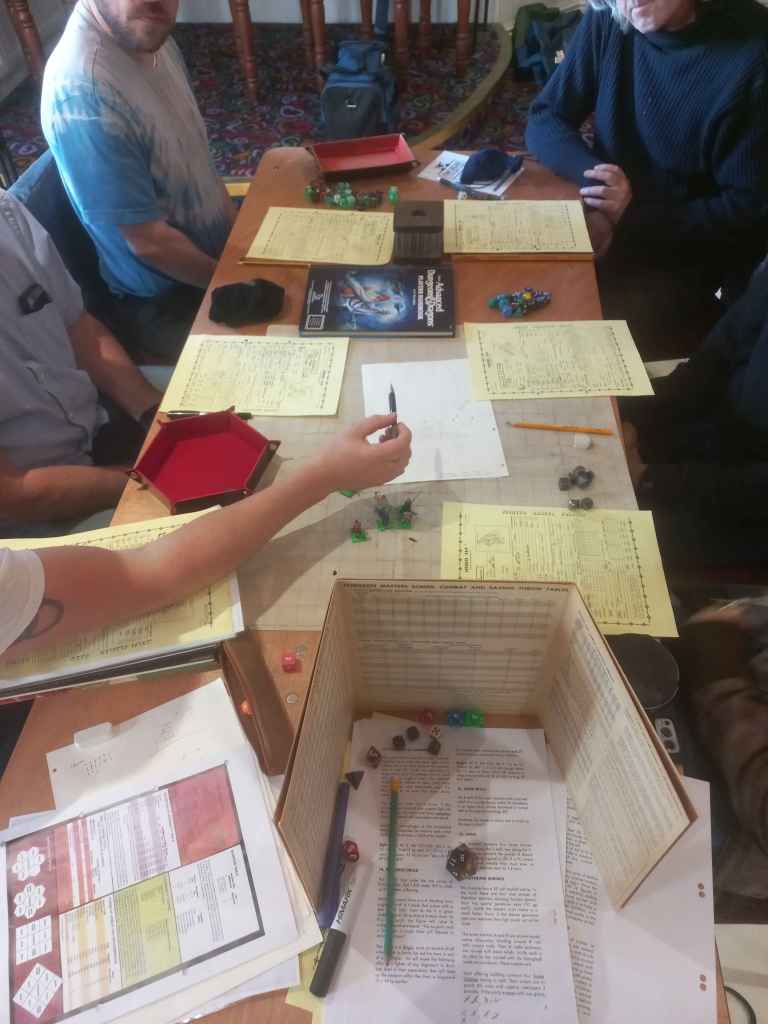
This was not a regular Wilderlands session. We ended up with something like eighteen players around the table. Watching them all filter in, I wondered how on earth this was going to work. That’s a serious crowd. My question was answered almost immediately as Attronarch took centre stage and explained how he would run things. He was using only the three little brown books and the alternative combat system, and to keep things moving he would resolve combat in DEX bands instead of rolling initiative. He also asked that no one sit on his side of the enormous table. It became clear straight away that he has real experience handling large groups. He held the head of the table with total focus directed toward him. It was impressive, and soon the game began.
Several of us regulars were running our own campaign characters. I was running Gomm, an expert thief, but since thieves don’t exist in the 3LBBs I treated him as a simple fighter and cleric mash-up. The con players were given a stack of pre-gens to choose from. After that we were offered a set of rumours and adventure locations and were told quite plainly that we could do whatever we wanted. The whole session was being run like any other night in the Wilderlands. We huddled up to discuss options. With all these mid-level characters, I wanted to make a real dent in the campaign world. My proposal was to take our considerable force — complete with more wands and magic swords than any responsible group should be allowed — to raid the island citadel of Hara and slay its Barbarian Queen. In my opinion she’s real bad news and could use a dose of justice. This was not a popular option, since Theo’s character has sworn loyalty to the Queen of Hara and is technically her castellan. We voted, and the table settled on exploring the Windowless Tower, reputed home of an artefact of great power.
We set out across the map. It wasn’t shown to us, but Attronarch said he had the region memorised and could track our travel easily. After a few days trekking in the wilds we located the tower: a featureless cuboid structure sitting in a bleak gulley. I used a potion of gaseous form to descend into a nearby crag, which dropped about two hundred feet and appeared to be the only entrance into the caverns beneath the cube. We all made our way down on ropes, and chaos immediately began. We found a huge bell hanging on a chain, and while a group of players attempted to build a human and halfling pyramid to reach it, others wandered off into side chambers. Yes, the party split almost instantly. Before long we met our first threat, a massive purple worm that burst through a set of double doors and nearly swallowed several characters whole.
The energy was high and everything was moving fast. At last the real test arrived: combat with eighteen players. Attronarch read from his DEX list, asking each of us what we were doing. I chose to strike the creature. Others dove aside or attempted to flee. Then Billy announced his action: “I use my wand of fireballs.” The regulars all groaned “No!” in unison. Billy gave a grin like a naughty schoolboy. “I use the wand.” Theo muttered a curse in his direction. This was going to go badly. It did. The wand vaporised the worm and about half the player characters. The first major wipeout of the night. Laughter echoed through the hall. Fortunately, my character had been on the far side of the worm and survived.
Fresh character sheets were handed out, and the new PCs made their entrance by climbing out of the worm’s remains. A memorable debut. The explosion had attracted more purple worms; we heard them rumbling toward us. We bolted forward, and after some Scooby Doo style antics through winding tunnels we discovered a warded section of the dungeon that the worms could not enter.
Exploration resumed. Someone was mapping on a whiteboard, but I was too far away to read it; I spent the time leaning back and enjoying the unfolding carnage, and appreciating how smoothly Attronarch was managing this ridiculous crowd. There were some excellent comedic moments. My favourite was an enormous chained Iron Golem which repeated, in monotone, “I am the Iron Golem of Wishes. Step forward and make your wish.” Premier took the bait and stepped onto the dais. “I wish…” he began, before Attronarch cut him off with, “FOR DEATH.” The golem instantly smashed him into paste. Perfect.
Players wandered in and out. Anyone could sit down and run the gauntlet. The game continued for hours as we descended deeper into the complex. Another standout moment involved a giant mimic disguised as an iron spiral staircase. I nearly died there; after striking it with my sword I became stuck, and it tried to haul me in. It managed to grab Melan’s PC and began devouring him until another fireball from the wand and a timely levitate spell saved him.
As the night wore on, somewhere around one or two in the morning, I found myself struggling to concentrate and had to bow out, stumbling to my room and falling into a 1d6 turn coma (that’s a 0 hp joke.) The game continued well after I left, and I later heard more incredible tales from the hardy few who lasted until the end. Those survivors secured the EGG OF DESIRE, which has apparently been causing all sorts of trouble in the campaign ever since.
This was an amazing and genuinely unique experience. A true taste of early LBB-era play, handled with real mastery. I’ve heard rumours that Attronarch will run another massive-table game next year. It’s the sort of event you absolutely should not miss. Cauldron is one of the few conventions where games like this happen at all. The 2024 Badwall Braunstein was one of my all-time gaming highlights, and now the 2025 Wilderlands Megatable joins that list.
SATURDAY BLOCK 4: Tamoachan Rises Again!
The Attronarch game had been immense, running on until god knows when. We were sharing a room, and I recall him coming in during the sunlight hours. He must have gotten perhaps an hour of sleep before we all woke for breakfast and a bit more gaming. I think I might have raised my head from my cot and called him the D&D Terminator. In retrospect, perhaps the Iron Golem of Wishes would have been more apt. What a guy!
Against the Slug-God
In the morning came the usual Cauldron awards: Best DM, Top Player, tournament winners, and Best Death. The scoring methods were explained to us, and I was awed by the Teutonic Procedure-Craft on display. KLM could learn a thing or two from the Cauldron scoring committee!
We packed up and got ready to leave the venue, but before we did, there was one last chance to game. These final sessions didn’t count toward DM points, which was a shame because I ended up playing in a belter.
I joined Elderthing’s game of C1: The Hidden Shrine of Tamoachan. Elderthing runs games in the ADDKON server, as I do, but his are exclusively in German, so I’d never had the chance to game with him before. I was excited to finally correct that.
I played Cair the Apprentice, a half-elf MU/Thief. We had our spells pre-prepared, and as the game began, we found ourselves in a hidden vault with poisonous gas swelling around our feet. Most of the group were experienced 1ers, so we quickly started using our slow poison and strength spells to buff the PCs’ skills.
Elderthing brought out his exquisitely painted 15mm miniatures, we established a marching order, and started smashing through dungeon rooms. Our goal: find breathable air before the game slot ran out—or die trying.
We did quite well. Only one of us died. We avoided unnecessary combat when possible, but we had to fight a giant slug-god and a Nereid. I took care of the slug-god with a fireball, caving in part of the chamber. The Nereid charmed me and the other male PCs, leaving the girls of the party to handle the battle.
Eventually, we reached breathable air just before the slot ended, securing the win. We probably didn’t take the optimal route, and I likely wasted a bit of time summoning a troglodyte to dig out a collapsed section, but it was all part of the fun. I don’t know if Elderthing scored us, but I’d love to find out. He was a phenomenal GM, running the game with encyclopedic knowledge of rules and spells. That’s the magic of Cauldron: everyone is tuned into the same game rules, which become like a stream we all float down together.
Elderthing has an adventure coming out in the next Fight On! issue, and I can’t wait to get my hands on it.
Old School D&D fans absolutely have to attend Cauldron OSR Con if they have any sense whatsoever. Bring on 2026!
There came a scraping that echoed through the heart of Rosenthal — a quiet and picturesque village deep in Germany’s heartland, a town lined with half-timbered buildings and bedecked with cobblestones. The sound was metal grinding against stone, much like the battle march of an orc legion descending a mountain might sound. The British contingent had just literally crash-landed into the central courtyard of Hofraithe Park. Setting down below the eaves of an ancient gatepost, we spooled from our rental car lugging bags stuffed with forty-year-old rulebooks, dice, and lead miniature soldiers. Chris, James, Andrew, and I emerged like four riders from the desert. We surveyed the damage. The collision with a curbstone had been insignificant — merely loud — acting as a herald to our arrival. I laughed heartily, for I had come to do damage of a different kind — to pillage dungeons and kill player characters. I had come to game!
A place out of WHFRP.
For those in the know, the Cauldron OSR Convention needs no introduction. It is the premier gaming convention for aficionados of early-TSR-era D&D. Over the course of three days we were going to set about conquering dungeons dark, deep, and dangerous — and have a bloody good time doing so.
I had only a few moments to take in the stunning surrounding architecture of the new venue before a random encounter with Attronarch in the courtyard led me to my dormitory. The rooms were small and wood-clad, somehow reminiscent of a dozen ’80s slasher movies misremembered. Exactly which cabin-in-the-woods film it reminded me of is uncertain. These bedchambers would not be dwelt in much, however, for the participants of Cauldron have approximately a 10% chance of being discovered in their lair during the convention. I dropped off my bags before gathering for beer and snacks in the dining hall.
There was a welcome speech by the magnanimous Settembrini. Then I had to dash off and prepare my first game of the convention.
Initial impressions: psionically blasted by an amazing location, awesome people, and overwhelming hype to start gaming. The night would be long — and for some, unending.
Adventure had begun.
FRIDAY BLOCK 1: THE COLISEUM OF THE LUNAR LION
I was DMing during Block One, which was a shorter three-hour session. The game I ran was lifted from my campaign world, only condensed to a single level — just enough for a one-shot I reckoned.
The concept of the adventure is that a Wizard Guild has paid the party to enter a complex to retrieve an item. The item is a scroll case stolen by one of their own rogue agents. This rebel MU escaped into the complex because it is incredibly well-guarded and usually an area of high-level adventure. However, after much research, it was discovered that the defences and traps within the complex were powered by lunar energy. And so, when a rare lunar double eclipse was due to occur, the Wizard Guild sent some expendable adventurers (ahem, the PCs) to collect the item whilst the defences were down.
This is a time-sensitive delve. I explained the nature of the scenario and the party goals to the players:
Collect the scroll case — but do not open it.
Do so within five in-game hours because…
The Moon powers some terrible defences, including an Iron Golem.
Take every bit of treasure not bolted down for yourself.
Once spells were selected, the party arranged their marching order. The characters approached the deep stairwell that led into the Coliseum. They’d arrived a little earlier than the beginning of the lunar eclipse. To make use of the time, the thieves crept down into the earth to espy the situation.
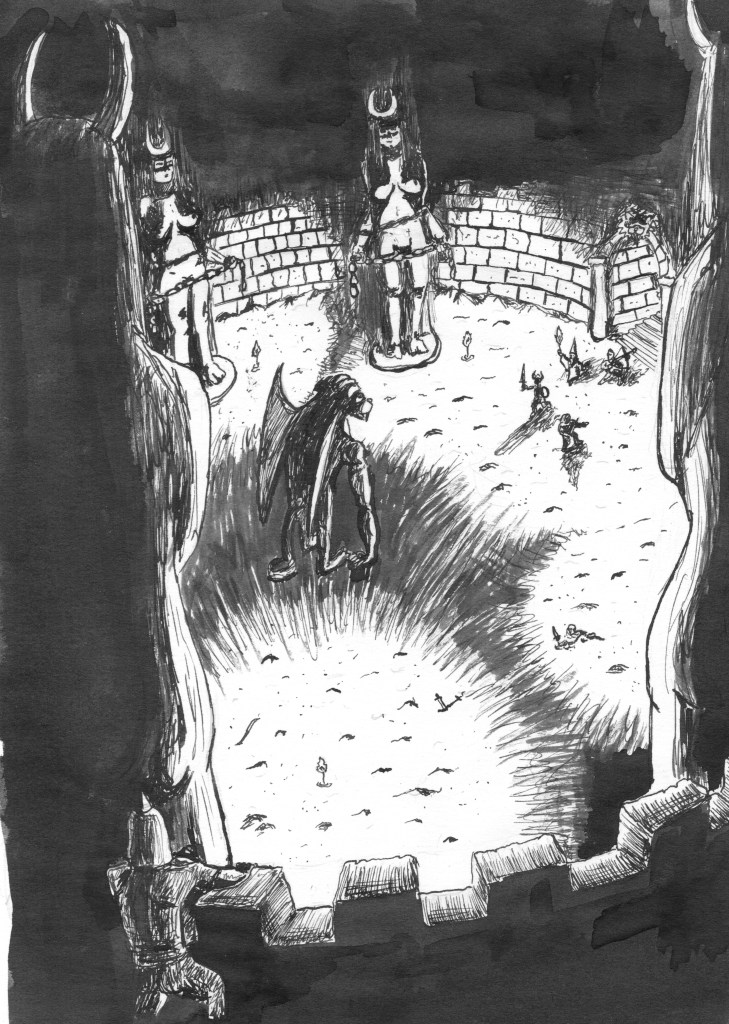
There they saw a large underground chamber with multiple tiered levels. At the centre of a sandy pit stood the Iron Golem, cast in the shape of a leonine Type VI demon. It spurted black puffs of smoke upward, and at its feet were several cultists bowed in supplication — their leader holding the reins of a warhorse.
The party hatched a plan to lure the cultists out of the area and trapped the stairs with caltrops and marbles. No luck on this plan, unfortunately. The party descended, carefully avoiding their own traps.
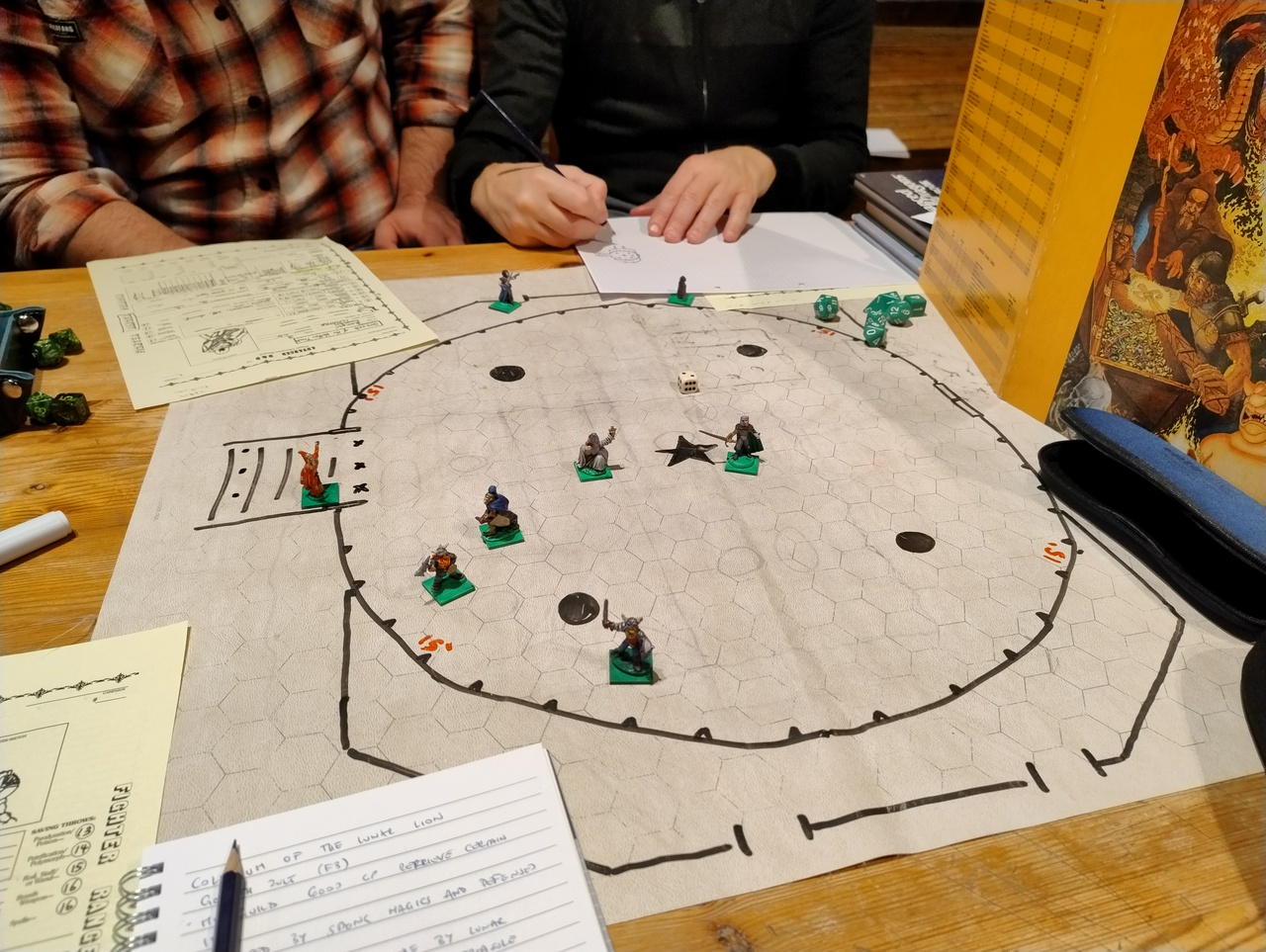
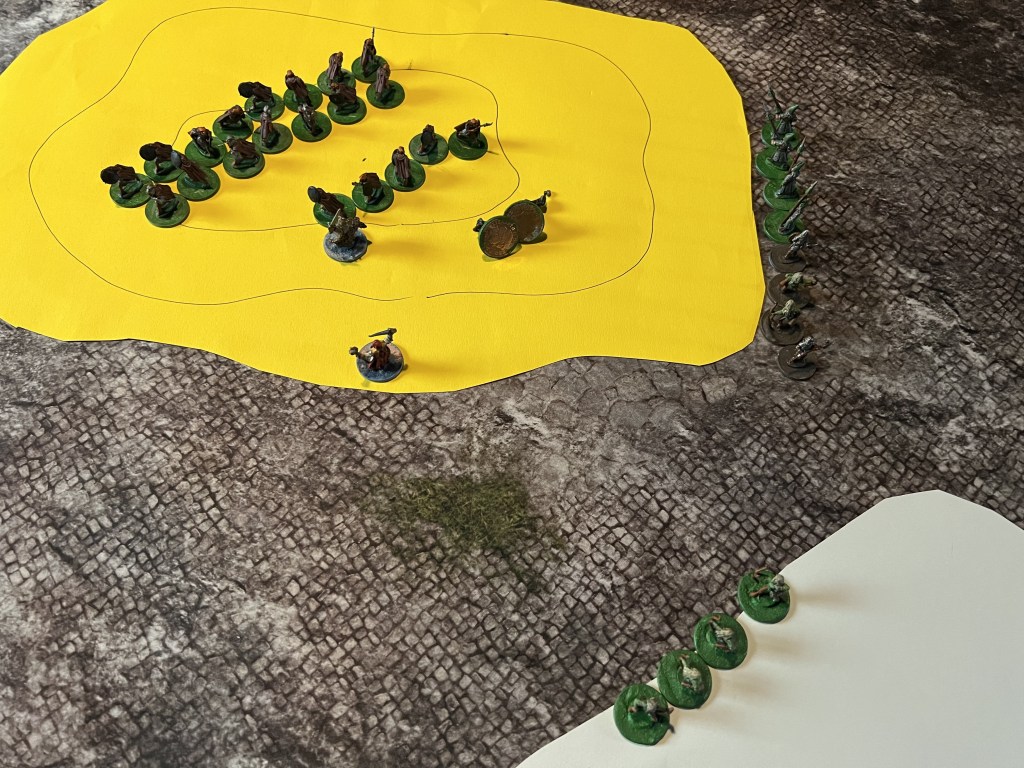
What took place next was a highly tactical battle. I had pre-drawn the area on my Chessex mat and we used minis with each hex representing 3.33 feet. A little different than I usually run the game, but this area was quite complex. On the battlements were archers, and hidden behind the now-inert golem was a fighter on a warhorse.
Image by Attronarch
Battle began — the horse charged — but Gorath managed to slay the charging beast with his set spear before the lance could strike him. The rider fell from the saddle and was soon surrounded. Up on the crenelated battlements, arrows rained down upon the party. Fire was exchanged. The thieves stealthily climbed up to the shooters’ level and, with daggers, ended the threat.
In all, the battle took about thirty minutes and was very tense up to the last kill. These cultists proved tricky due to their unbreakable morale and higher ground. But the way into the dungeon proper had been opened. The party lit their lanterns and decided to climb the eastern battlements and enter through a vomitorium, rather than attempt the large lion-shaped double doors to the south.
The players tensed their jaws and set about tearing through this dungeon as quickly as possible. A DM loves to see it. They passed by many of the time-wasting baits I’d left them — skipping Mythos Tomes and sealed pots of slime — though they couldn’t help but interact with a helmet that had detected as evil. Inside was a Vargouille, quickly dispatched.
Soon the party found a chamber with a bowed floor, its ceiling bejewelled with a hundred moonstones. Brave Attronarch stepped forward, putting his character into the room and summarily falling twenty feet into a pool of water as the floor caved in. Down there, he was assaulted by mud men, but the party got him out quickly enough.
Onward they went, stealing gemstone eyes from statues and avoiding chain-pulling zombies. Eventually, an ethereal statue of a maiden holding a wand was discovered, draped in lush jewellery. How would they capture that treasure? Nobody knew — but they were here for a scroll case, and that’s what they were determined to do!
So onward they went into a nefarious-looking altar room. The cowled figure behind the altar looked up to reveal a skeletal face and silently pointed toward them. All but two of the party were teleported back to one of the starting rooms. The crypt thing charged the remaining characters. The teleported group rushed to their aid, but in comical fashion, Niko grappled the undead beast to hold off its attacks until the cavalry arrived.
After this, the game became increasingly chaotic as the players split into three groups to cover more ground. Real and game time were both ticking away — would they find the scroll case in time?
Eventually, one group did, after an incredibly lucky pick locks roll on a door. Inside they found the corpse of the rogue magic-user laid out on an embalming table. Unluckily, the gem in his fist contained his soul, which lashed out and possessed Billy’s character, Bharak Blackbraid.
Who said dwarves saved well against magic?
I took Billy to one side and gave him the lowdown:
“You are now SHIGAST THE SORCERER. Get that scroll case for yourself, no matter what. Oh yeah — and you have an invisible imp familiar in this room.”
It didn’t take one minute for the players to start wailing on him. Poor lad.
A few lone survivors crawled out of the Coliseum, scroll in hand. Many others had perished at the hands of shadows and imp poison. That’s the way it goes!
This was a very fun game and a great way to kick off the con — the players really kept me on my toes. Should any of my players want to join my campaign, even for a few session or two. Send me a message.
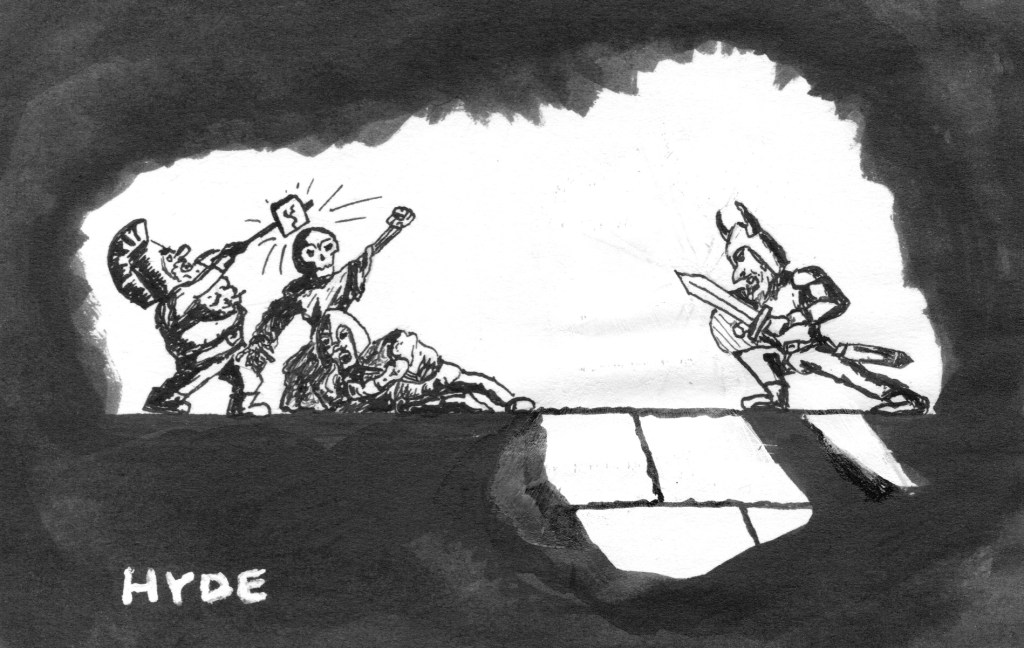
If you’re wondering why I’ve included several illustrations of the dungeon, it’s because I’ll be releasing this adventure as a Pay What You Want document on DriveThruRPG in the coming weeks (when I can find the time to properly edit the thing). All funds raised from module sales will be donated to Cauldron Con 2026! Consider this as good an endorsement of the convention as I can offer!
FRIDAY BLOCK 2: THE BATTLE OF EMRIDY MEADOWS
After some delicious home-cooked food and several beers — which, of course, all come included in the convention’s price (yes, all you can eat and drink!), I gathered at the wargaming table to partake in a recreation of the legendary battle that lies behind some of Greyhawk’s key dungeons.
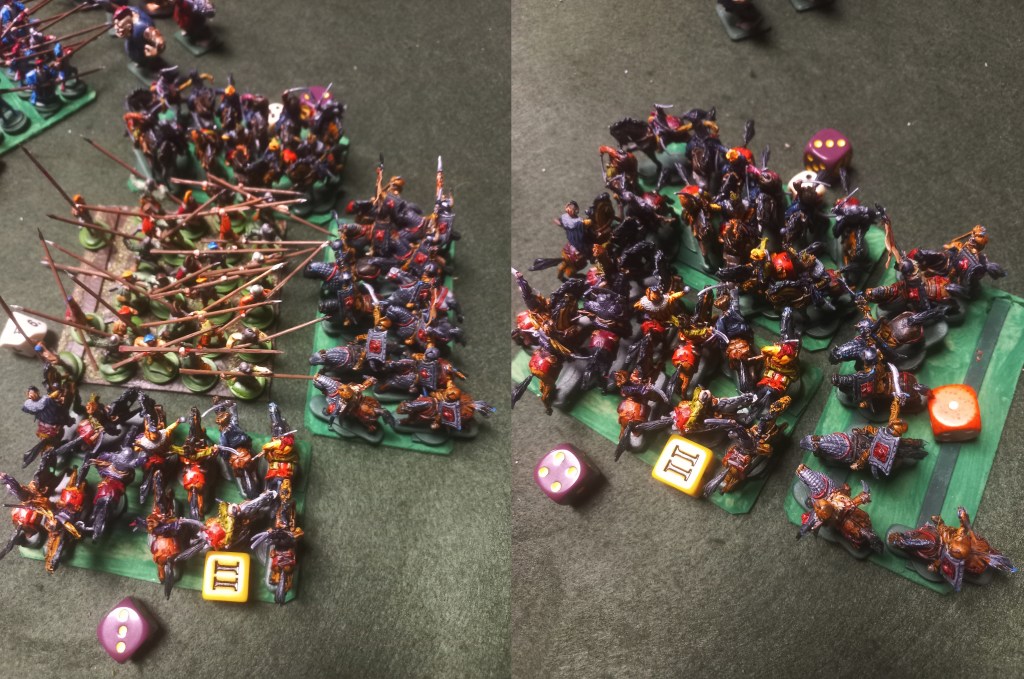
I had brought along some miniatures to donate to Nexus in the 1/72 scale that Settembrini and Ghoul use for their Chainmail battles. I was so impressed with last year’s Chainmail Naval Battlethat I’d offered to paint up some of my unused miniatures for them. I’d been tasked with supplying some orcs, evil horsemen of the Temple of Elemental Evil, and some medium cavalry for the Kingdom of Furyondy.
Initial Setup
Upon hearing I was donating these miniatures, my partner was rather pleased to see me pack that mass of figures into my bag. Unfortunately for her, the convention happened to be selling cheap grab bags of miniatures for five euros a pop, so by the end of the weekend all that freed-up space was refilled and stocked with tiny lead men. (She still hasn’t learned of this shameful behaviour — they sit secreted away in a shoebox in my home office.)
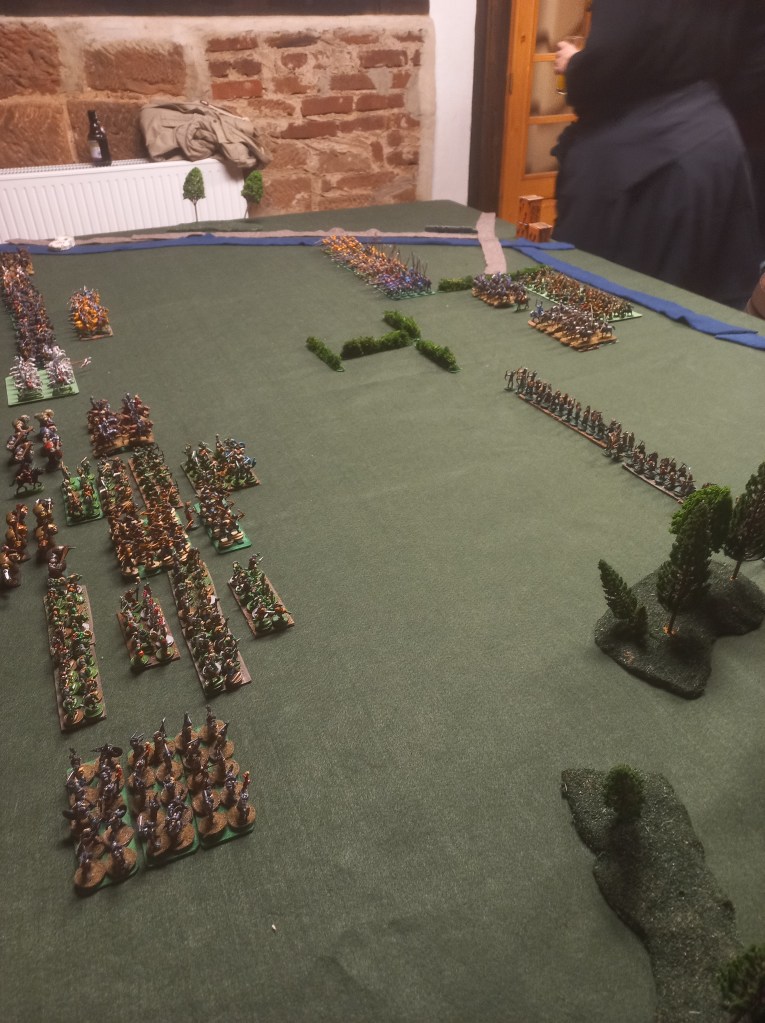
Once all the players were gathered, Setti gave us a fascinating breakdown of the original lore of the battle. After researching Gary’s description of Emridy Meadows and cross-referencing it with known military history volumes from the Gygax library, they’d managed to identify a few likely historical inspirations. One of those was the Battle of Tewkesbury, and when one reads about the preemptive charges by the orcs, it does share some parallels with the Duke of Somerset’s calamitous march at that battle.
I’d encourage Setti to make a post about how he designed this recreation, as it was all very interesting — though the quantity of fine German Pils I drank that night ensures much of it is now lost to me.
There were six players, and each of us selected a division to control. I chose to take control of the evil horsemen, since I quite liked the paint job I’d done on them. I also didn’t fancy commanding the orcs, knowing full well they were going to have a bad time with morale, infighting, and going up against dwarves and elves. The horsemen didn’t have much better odds, for formed across from my vast host was a giant line of pikemen. Why didn’t I opt to control the forces of good? For the challenge!
I’ve used the rules of Chainmail enough to know that Gygax had a hard-on for Swiss pikemen (with co-morbid lusts for polearms), and they have some absolutely busted mechanics. Unless I played very carefully — and had some luck — my forces would soon be decimated upon those pikes. I was also given a secret objective that could secure me a personal victory: I had to engage Prince Thrommel in melee and then make away from him and off the board. In the event of an evil-side loss, I might still claim an individual win.
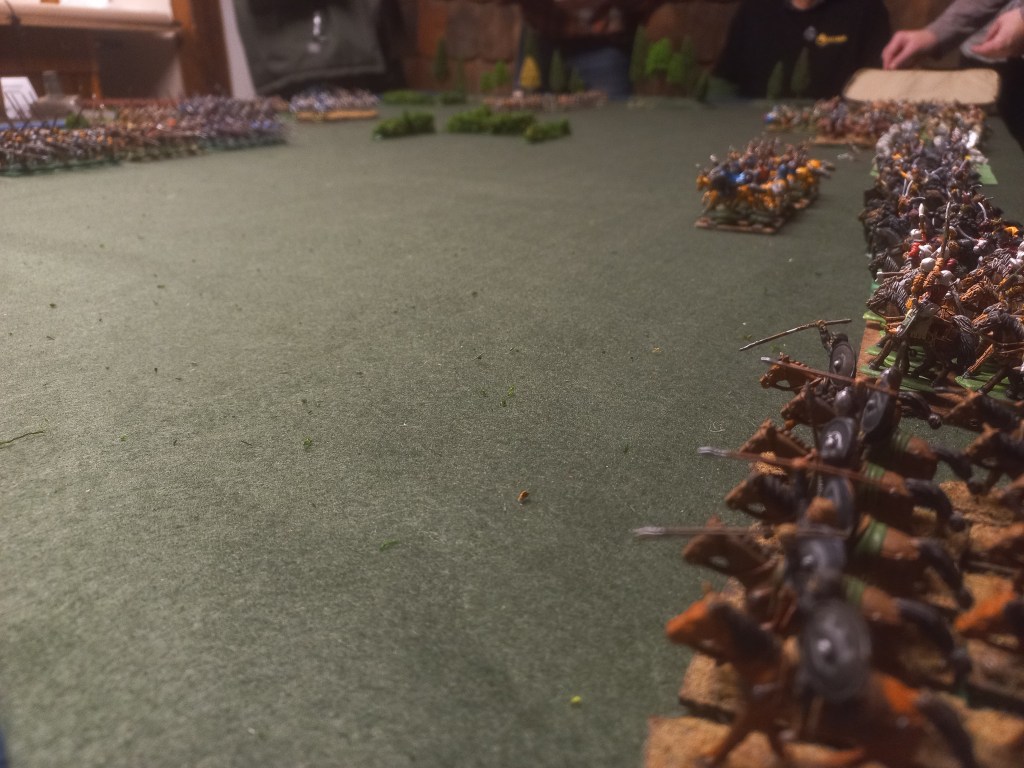
The battle began and we all started taking our turns. The evil side had a plan to begin with, but this soon fell by the wayside as we had trouble organising our lines on the right flank. I pulled my horse tight to the right and requested some screening units push forward to break up the lines of pikemen. This didn’t happen, so I had to throw my own light horse against the pike wall in a desperate attempt to stagger the line and open up an opportunity for flanking.
Evil players began dropping out a couple of turns in, as it was getting late and many of them had been traveling all day. By the end of the battle only myself and the mighty Walid stood against the forces of good. My sacrifices had paid off: as I won a second initiative round, I had broken the lines of pikemen into three separate units and rushed some horse behind them. With the sounding of a horn, my riders encircled the pikemen and crushed them to naught. The right flank of the Furyondy army, its entire detachment of pikemen, were decimated. Bring me back my legions! The printed name ‘Gygax’ on the Chainmail rulebooks before us began to miraculously run with rivulets of blood.
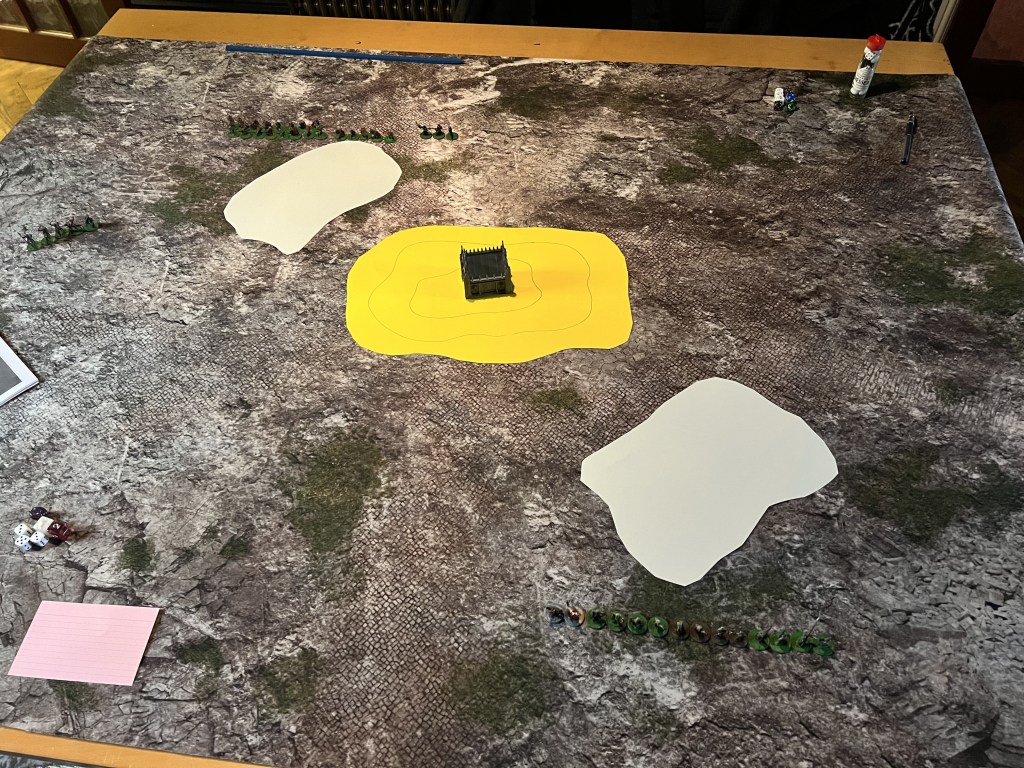
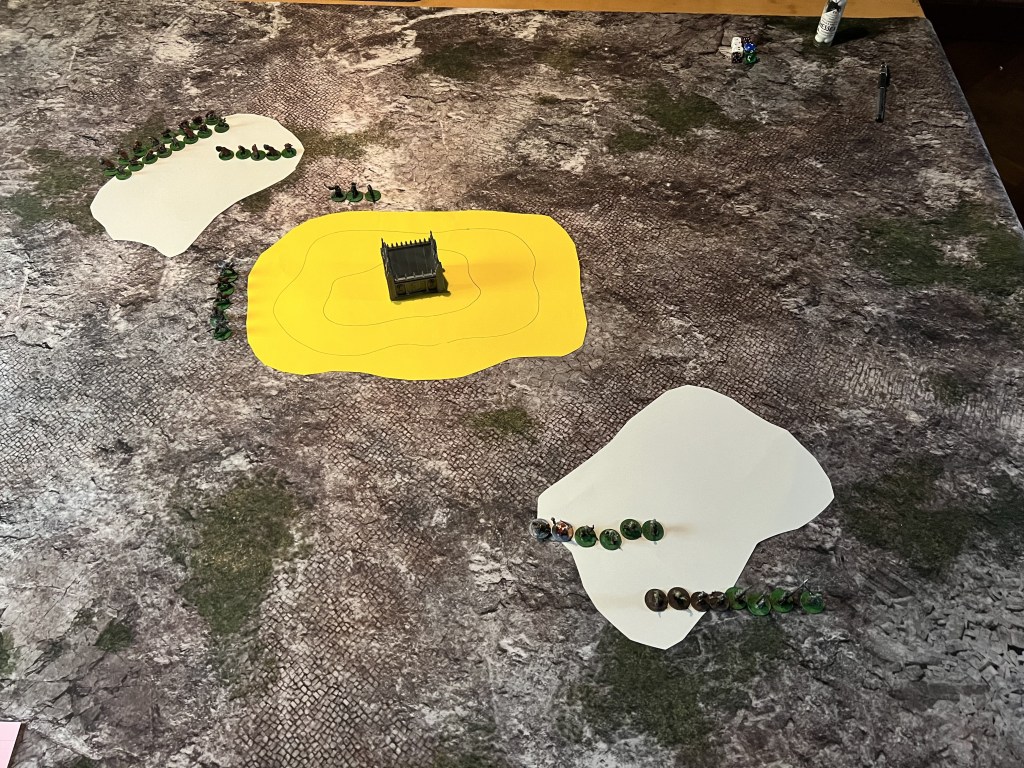
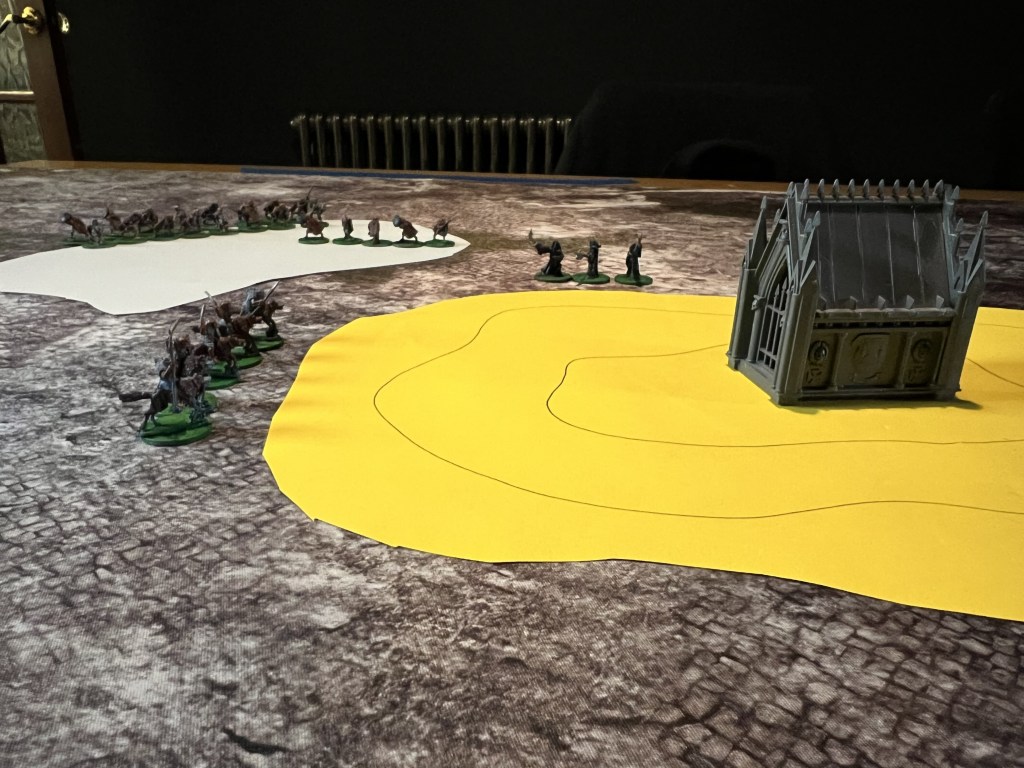
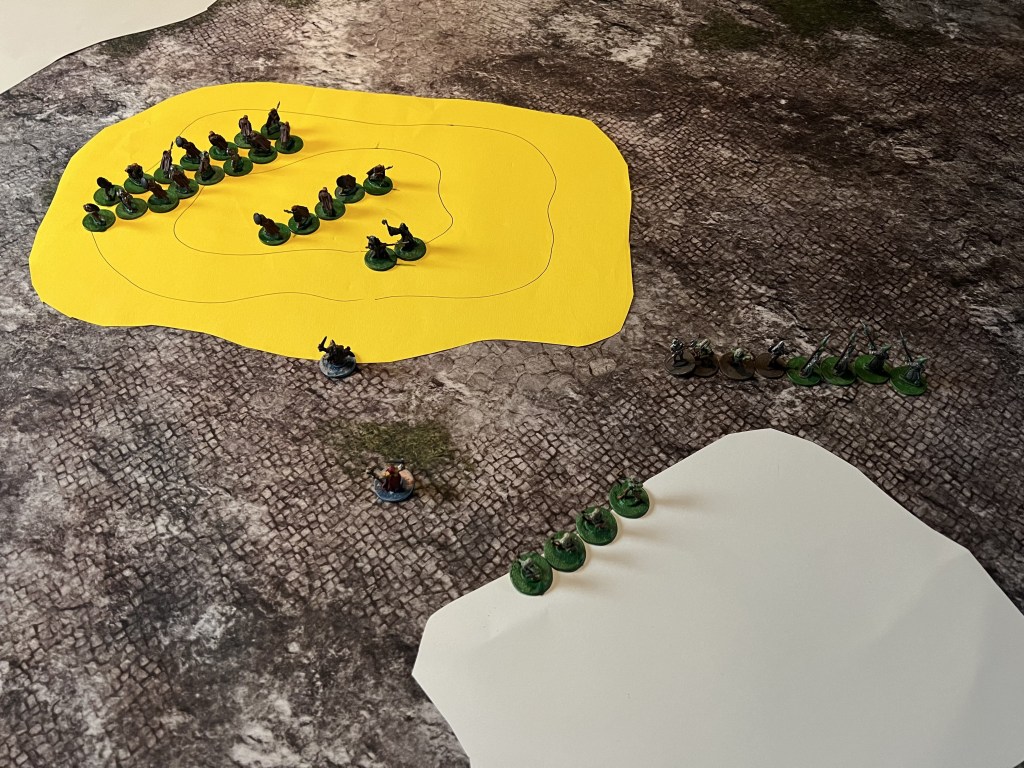
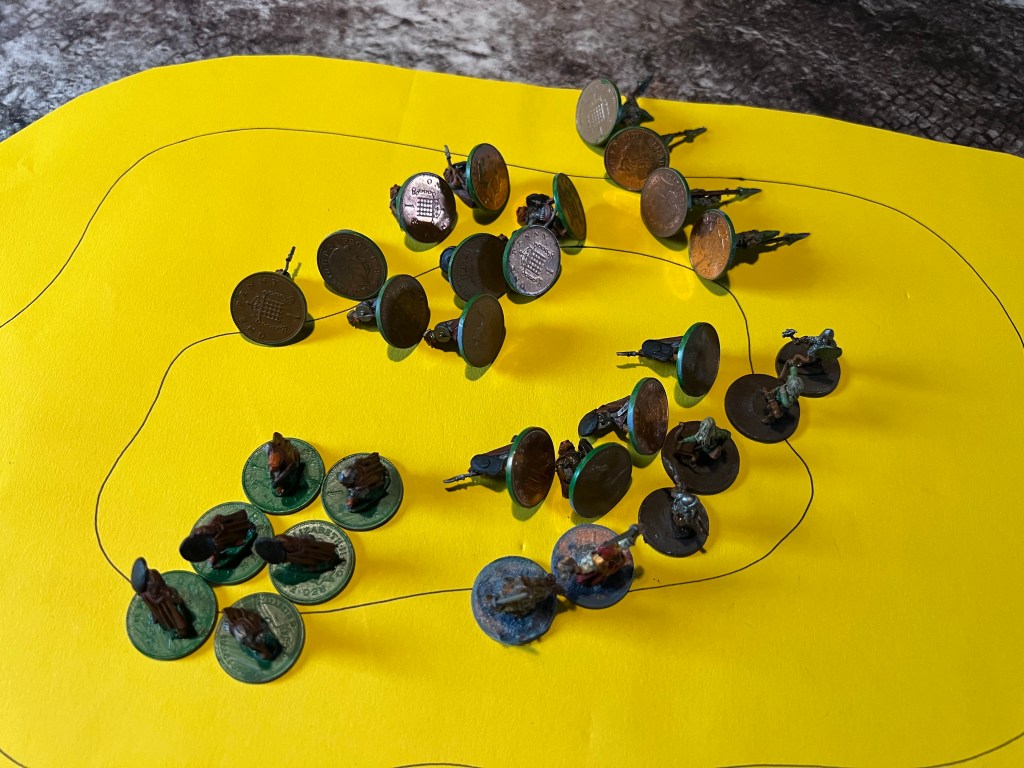
The before and after the final flanking.
Walid had summoned a fire elemental, and with it slew the Prince of Furyondy. History had been irrevocably changed! The Temple of Elemental Evil was victorious!
This was a great deal of fun. Settembrini did a really great job of developing and judging the battle. The game went on until after three thirty in the morning. Afterwards I staggered back to my room and collapsed in my clothes into a deep, dreamless sleep. Even the jet-engine-loud snoring inside our bedroom could not rouse me. I was content.
First day impressions: Raw Adventure Gaming Awe.
In my next post I will cover play reports for Saturday and Sunday. Fight On!
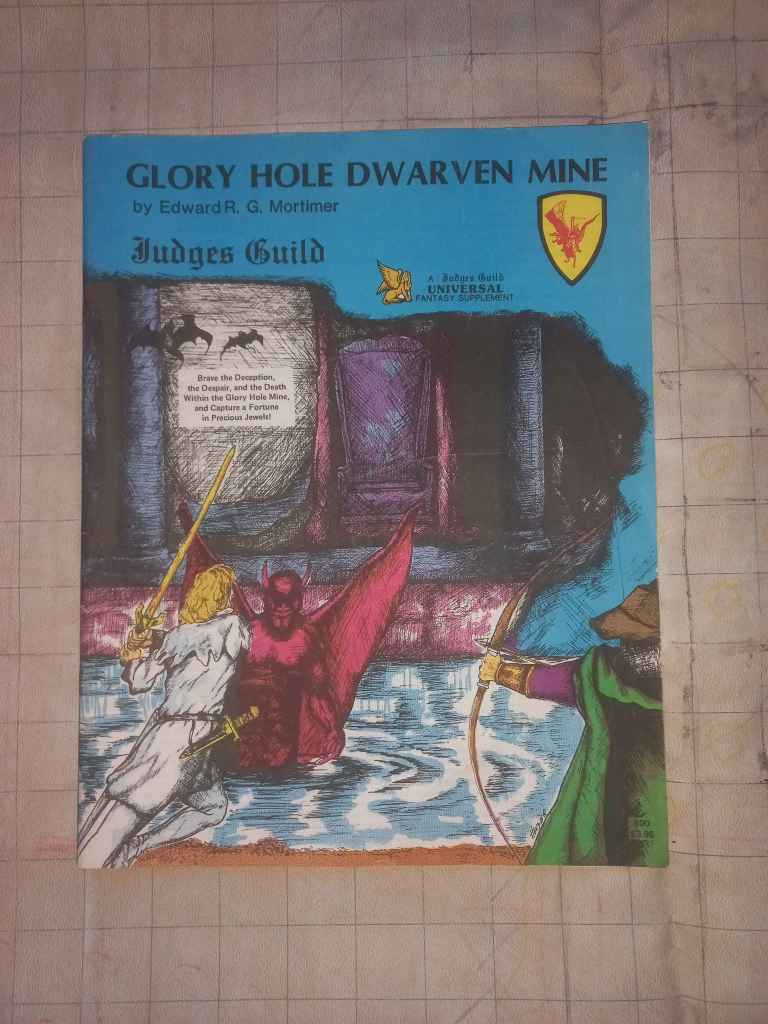
The night was still young. Serpents had been slain. Treasures recovered. But now, it was time for an adventure of a different sort. We were about to descend into the GLORY HOLE DWARVEN MINE.
I expected puns, ponderous mapping, and possibly we would discover if Dwarven women had beards or not. (Spoiler: they do!)
The Owlbear and Wizard’s Staff Convention was in full swing. Competing with my evening slot on Friday was the famed Convention Curry Night, which had its own sign-up sheet. I remember thinking: what game would tempt a player away from the lure of vindaloo and lager?
Well… what’s spicier than a Glory Hole?
I’d picked up the Judges Guild module maybe a year earlier, cheap on eBay. If I’m honest, the title alone sold it. A quick skim revealed there were bits I’d never use. Without spoiling too much, there’s a section where PCs can find garbage cans, baseball bats, and flashlights. Artifacts from a ‘modern’ past.
Still, the core dungeon looked strong. A sprawling mega-dungeon focused on faction play, with rival groups exploring the gemstone mines outside the City State of the Invincible Overlord. That alone made it worth a spin.
I loaded up my event onto the schedule, and soon after Matthew — the organiser of OBWS, lovely bloke all around — asked if he could put a disclaimer on the game listing:
“There is no X-rated content in this game.”
Of course! The idea only added to the absurdity of the module’s name.
Lewis Pulsipher reviewed the Glory Hole in 1982:
“This was a decent idea, for the most part, but inadequately produced.”
How you butchered my boy, Lewis.
Well, I was about to find out for myself. Five players had signed up.
THE HOLE
Game Prep
Unlike The Setian Vault, which I wrote myself and have run in my campaign, this dungeon was totally alien to me. I’d selected it before even finishing a full read-through.
I’m confident at winging things, but I sat down properly in the weeks leading up to the con to give it a full comb-through.
And there were… issues.
It’s written for the Judges Guild Universal System, which is basically D&D with the numbers filed off. No big deal at first…
Until I noticed the monsters were D&D-adjacent — but not quite. Gargoyles in the module, for instance, didn’t require magic weapons to be hit. “Ettins” were renamed multi-headed ogres and had different stats entirely. There were plenty of unique monsters.
There are tons of factions, all with plans. But the NPC stats are in one section, and the encounter text in another. Not ideal for con play with all that potential parsing.
The place is huge. Would this even work as a one-shot?
It recommends a party with a combined 50–60 character levels. That probably presumed a large table of players with mid-level PCs. I didn’t have that.
But hey — I had sign-ups, and I’m not one to back down from a challenge.
So I said: fuck it. Generated some level 10 characters from osricrpg.com, and slid up to that Glory Hole to show it who was boss. To help the players out, I pre-selected the spells for the casters. I also made notes for segment casting times and durations for each spell. I wanted to minimise looking up rules as much as possible during the game.
I decided to use the monsters as written in the module. I skimmed the NPCs, started making some faction notes, but eventually said: to hell with this, I’ll improvise.
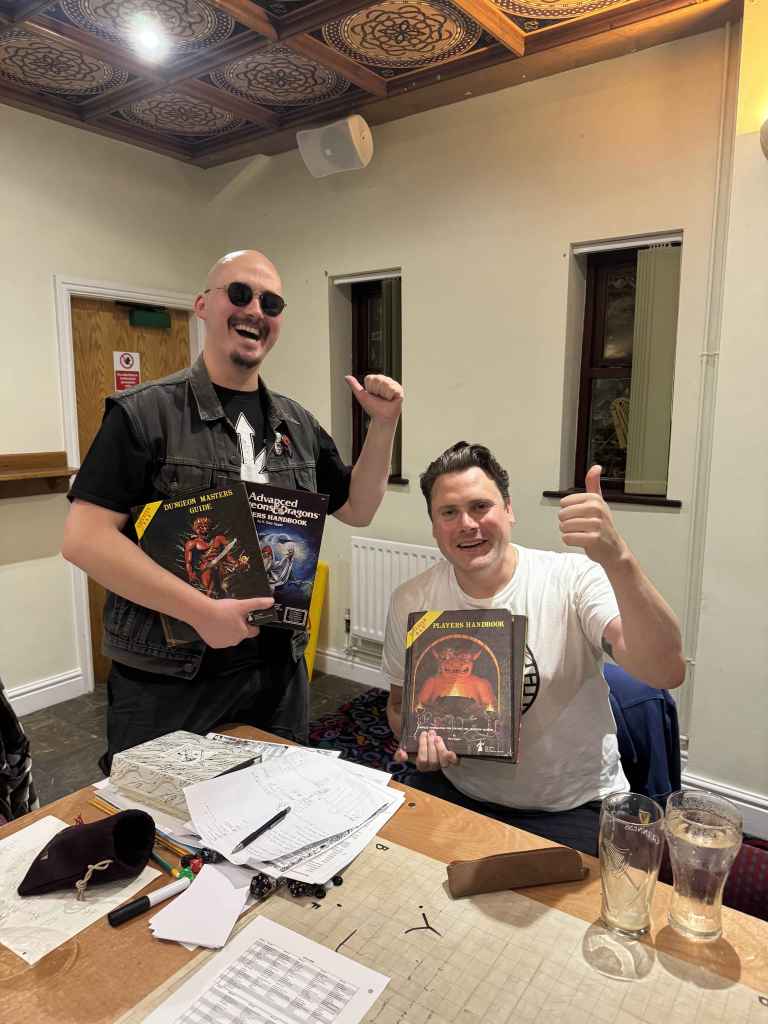
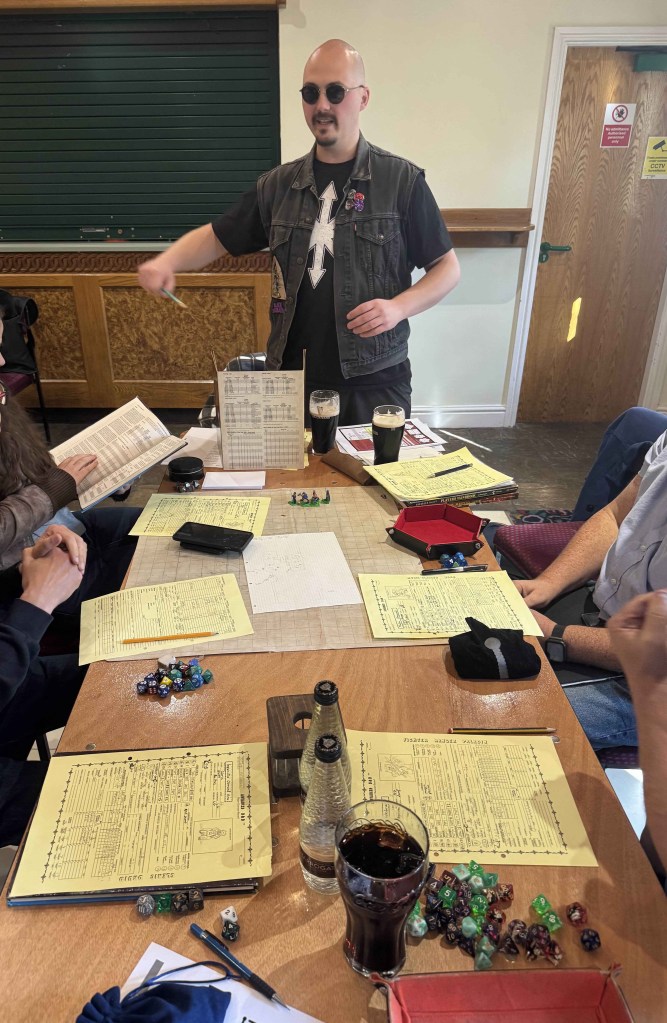
Fast forward to Saint Patrick’s Irish Club. Friday evening. The sun is setting. Dark forebodings. I sip my Guinness. Equally dark. My eyes are dark also, though not through choice. I’m wearing my sunglasses. Why? Because a few days ago I lost my prescription glasses. This is the only way I can see.
Sunnies in a darkened hall probably had everyone thinking I was that guy who wears sunglasses in the pub. Ha! Let them.
Behind my inky black lenses, I had enhanced powers of obscurement. Witness my ultimate poker face.
Then the players arrived at the table.
“Are you here for the Glory Hole?”
The Party Gathers
Our PCs
James Knight – Meomesiene, Human Cleric (10), Lawful Good Items: Helm of Comprehending Languages, Potion of Invulnerability, +1 Small Shield
Andrew – Godanova the Spiritual, Half-Orc Fighter (10), Chaotic Evil Items: +2 Two-Handed Sword, Potion of Growth, Scroll of Protection from Possession
Darren – Okar, Dwarven Fighter (7), Neutral Items: Javelins of Piercing, Potion of Gaseous Form
Andy – Kurlacon the Fearless, Human Thief (10), Chaotic Neutral Items: …Sweet Water (very useful)
— – Alin the Eldritch, Human Magic-User (10), Lawful Evil Items: Potion of Healing ×2, Potion of Copper Dragon Control, Scroll (Wall of Force), Wand of Enemy Detection
Note: No one picked the Illusionist I’d generated. Bummer. All the magic items were generated by the website. Some characters were luckier than others.
Second Note: One player’s name is missing — he arrived late and I forgot to note it on my record sheet. If you’re reading this, drop me a line!
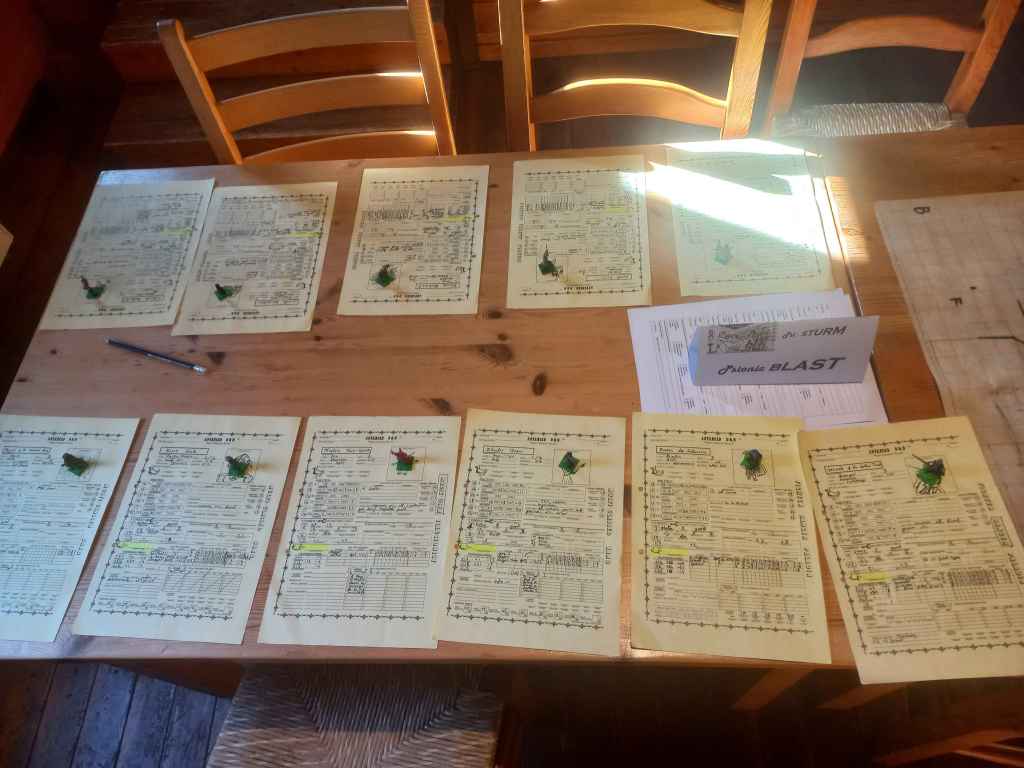
The character sheets for this session weren’t printed on the fancy fake Goldenrod stock. I kept them cleaner: just the stats, saves, attack matrix, damage ranges, boxes for magic items, and all their prepared spells. Still, despite best efforts, they came out cluttered — as is tradition.
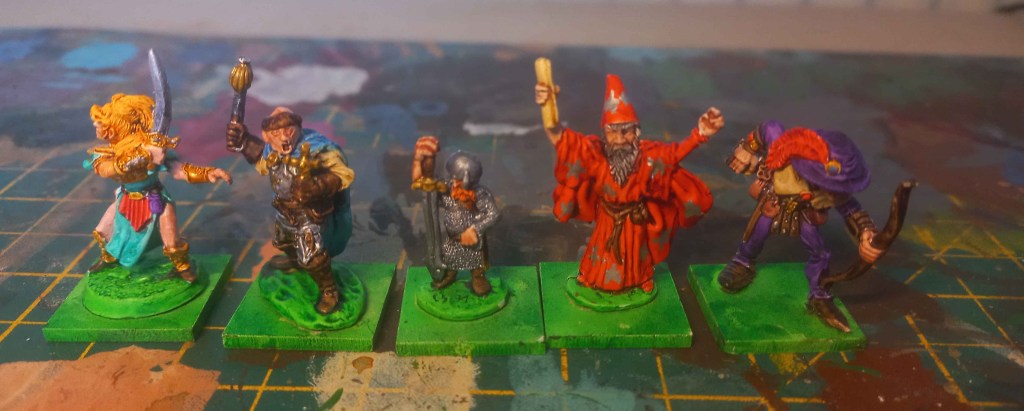
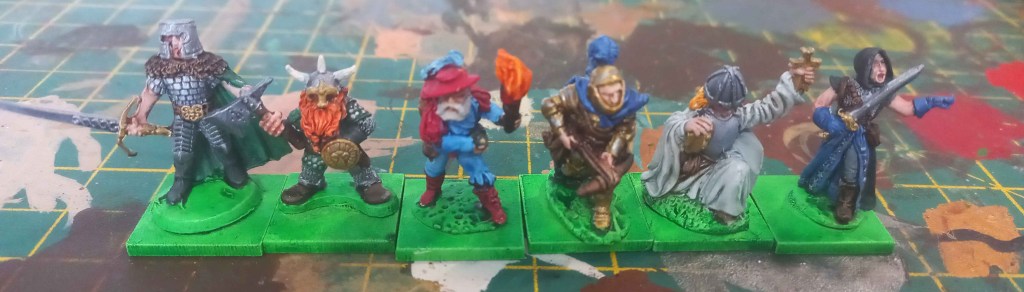
Players picked their characters as they arrived, first come, first served. They also chose from my pool of Ral Partha miniatures.
“I think I had this miniature back in the day!”
As a small bonus, I let the players roll 2d6 light footmen to accompany them.
I then asked the party to select a leader. Andy — with his tenacious thief — took the mantle.
I grew solemn.
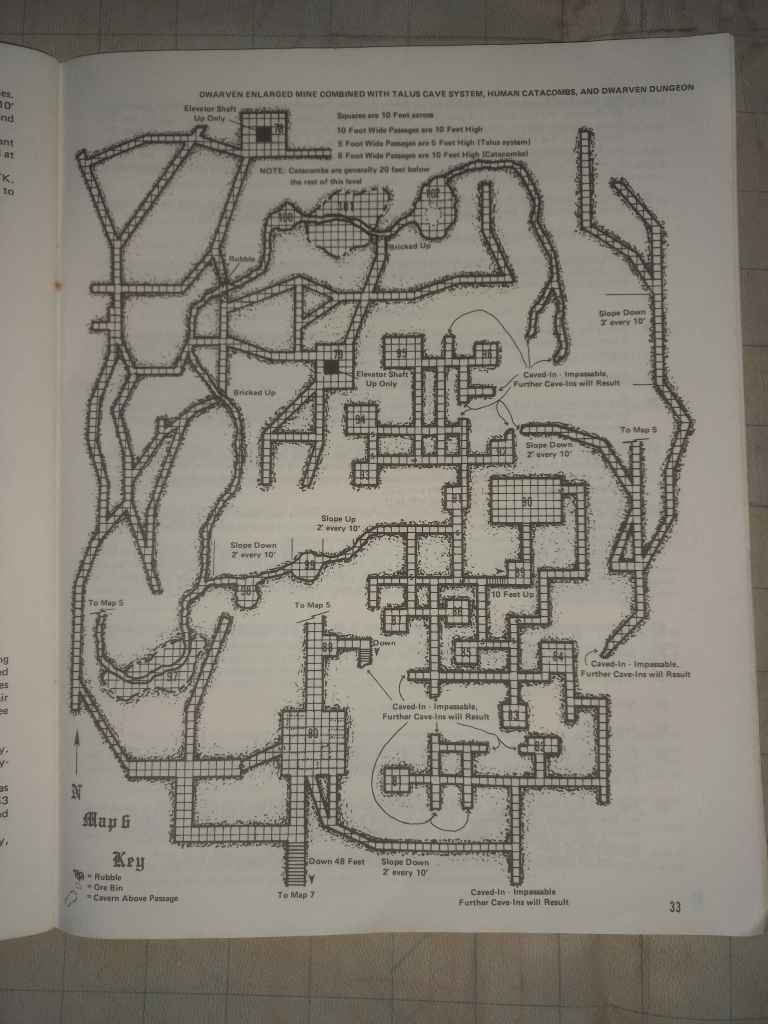
“Now, I need at least one of you to step up to be the mapper. It won’t be an easy job.”
No kidding. Mapping this mine would not be a cakewalk. (SPOILERS BELOW!)
With gusto, Andrew stood and declared he was the man for the job. A brave soul. He had no idea what awaited him.
One last piece of upkeep: The number of magic javelins needed to be rolled. The MU needed to choose what type of Elemental he’d try to summon. Earth was the obvious choice.
We had a date with a Glory Hole.
The Goblinoid Massacre
The party strode into the place like Don Juan. And why wouldn’t they, for God’s sake? Look at them — levels dripping off every limb.
After some tunnels, they entered a large hall filled with empty mining crates. Up ahead, they spotted another adventuring party led by an Amazonian warrioress. The party had rolled surprise on her and so hooded their lantern. They watched. They listened. The female leader spoke — something about following a map.
The players decided to shadow them from a distance.
That continued for a bit… until a random encounter occurred (there are so many random encounters on this level — I guess that’s to simulate the crowds of parties and monsters descending into the mines).
I rolled: goblins.
Time to see what the party could do.
In a single one-minute round, the dwarf and the half-orc annihilated all twelve. Those poor 1d6+2 HD gobbos never stood a chance. Their bodies lay brutalised across the battlemat.
A short while later — another goblin encounter. You guessed it: more carnage. This time nine goblins. Gone. In under a minute.
“I roll five hits.” “I roll six” “Someone pass the man more d10s.”
These encounters caused the party to lose track of the Amazon’s trail. With no Rangers among them, they couldn’t trace her.
Four gremlins jumped out next — and died almost immediately.
The party was descending deeper. They now carried sacks of pilfered silver pieces. Alin the Eldritch hopped into a mine cart and rode down into level two.
Mutiny!
A quick jaunt through this level, it must be said.
As soon as they entered the area, they came upon an elevator shaft.
“Well, we want to go deep in this Glory Hole, don’t we?”
There was a resounding yes.
The lift worked by a set of man-powered wheels. The party demanded two of the light footmen man it and send them down. After a loyalty roll, they weren’t too happy about that. Alin the Eldritch stayed behind with them, essentially strong-arming them into the work.
The party descended in the lift and came upon a Cave Fiend — one of those new monsters. I quickly scanned the monster entry. It had good odds to surprise the party, but no luck on the dice. It sat there, squat and grey, eating two Dwarven corpses. We diced initiative. It took them two rounds to slay it.
Meanwhile, on the upper level, the two men-at-arms were whispering, readying to betray ‘ol Alin — throw him down the shaft! Alin overheard their plans and, with a quick magic missile or three, sent the men to their doom.
Unfortunately, this caused a random encounter, and bumbling into the room came a two-headed ogre who thought Alin looked like a most tasty morsel.
The wizard was snatched up, but a bit of luck with a reaction roll — the two heads started arguing over who got to take the first bite. The rest of the party below managed to race back up the shaft to save poor Alin before he became chow, killing the ogre in a couple of rounds.
Long-Legged Freaks
Torches lit. Their sacks in hand. The party returned down and explored some more. Graph paper was being thrown over to Andrew rapidly.
Through the caverns they trod. Into a huge chamber filled with more of those ore bins. There was a cave bear. That was one-shotted. The party didn’t even ask about skinning the thing. Whatever was going on!
But aha! Inside those bins awaited a nasty surprise: Black Widow Spiders. The Black Widows looked puny in the manual, so I rolled giant poisonous spiders from the MM instead. Aha! A challenge at last.
No.
The party was not surprised. Then some magical flying javelins took off. Magic missiles shot out. The fighter was smashing out three hits in round one. It was over fast. A hit or two from the spider venom was all saved.
Inside the bins was ore. There’s a mechanic for determining what kind. It was Fine Silver. The party took a bit, but it was bulky — and surely there would be better treasures ahead.
RIP Bong, Gono, Bond, Falty, Salty, Arco, and Tarco
The party carried on and soon found another lift. This one went all the way to the sixth level. They descended level by level.
On the way, they encountered their first group of dwarves. There were twenty of them, and the first six ranks fired bolts from crossbows at the party. Each firing, then dropping to a knee. That was nine shots in a round. Did the party take damage? Hardly. They charged in and slew seven of the poor bearded lads in two rounds.
The morale dice demanded the rest surrendered. After a brief back and forth, the party gave them some treasure and asked the survivors to join them deeper into the mine. On their travels, they had found a few veins of precious silver.
A few words were spoken for the fallen dwarves, who were named Bong, Gono, Bond, Falty, Salty, Arco, and Tarco. Yes, the module names every dwarf NPC.
You wanted Dwarves, we’ll give you Dwarves!
Deeper Still
It was growing late in the day. The party had now descended all the way to the sixth level. How many times had I described forty-five degree passages and Y-shaped intersections? Undetermined.
The party had slain Cave Fiends, trolls, and a few green gargoyles.
During one particularly nasty combat against gargoyles, Alin the Eldritch had summoned a horde of troglodytes to his aid. Unfortunately, the stench from these beastmen had hampered the party’s own attacks.
But we were deeper now — in both pints of Guinness and shame. How many Glory Hole puns had we made? Never enough.
The party came upon a second Dwarf party, this time led by the exquisitely named Meathead Gilfath. This dwarf joined the expedition with gusto.
Soon the party were breaking through bricked-up corridors, sending their bearded miners ahead. These sounds almost always brought a random encounter, but these trifles were swatted away like pawns from a board.
“Let’s get through these bricked-up passages a little quicker, I have an idea. How much rubble have we excavated?”
It was time for the Elemental to be summoned.
Don’t Lose Control
The wizard Alin summoned his servant from the Plane of Elemental Earth and bound it to his will. With it, they smashed through several bricked-up chambers. The frequency of these sealed portals now led the party to believe they were on the track of a great treasure.
“Okay, you’ve moved twice with the Elemental out in front of the party. Roll a d20 ten times. Don’t roll a one.”
The players gathered their heads around the die. Alan’s player began rolling. He was nearly through them all… when that natural one appeared out of his fist. The table let out a roar.
The Elemental had turned against its master.
The 16 HD creature did more damage than anything else previously. Spiritual Hammers were thrown. Magic javelins loosed. HP was lost. The party were eventually victorious — but at some cost. Plenty of dwarves and men-at-arms were dead. Enough healing spells were used to fix up the party.
The Final Push
With that chaos behind them, the party followed a tunnel into a dark and natural cavern. There, in a high-roofed cave, they came upon the lair of the green gargoyles. The party found themselves pinioned in an archway as the creatures swooped down, ripping the dwarves to pieces.
The fighters had to step up and take the brunt. It was a punishing fight, and one particular gargoyle — bigger than the rest and wielding a magically glowing sword — caused serious pain.
In the end, the party caused the gargoyles great losses and drove them to flee up a large tube in the chamber’s ceiling, leaving behind a huge haul of gold coins — and the gargoyles’ eggs.
These were unceremoniously smashed. A shame, really. They could have made very unique pets in a campaign. Never mind. The victory was deserved.
The party packed up their coins. We had a brief calamity whilst getting back out of the dungeon. Time was running out. We counted out the moves. I rolled the encounter dice.
The party had spent twelve in-game hours in the deepest reaches of the GLORY HOLE, but they had emerged into the fresh Altanian air — richer, and alive!
The Happy Ending
As is tradition, I asked the victorious players to name their MVP. The legendary Andrew won without any contention, for he had studiously mapped the whole expedition and done a fine job.
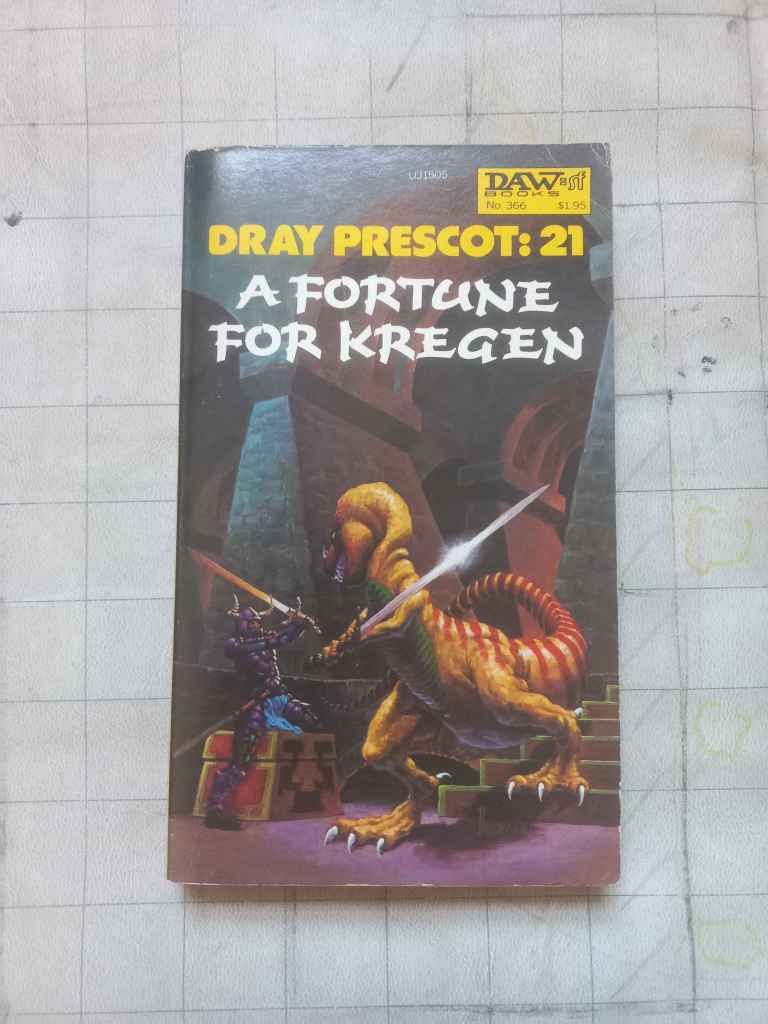
He won himself a copy of Dray Prescot: 21 – A Fortune for Kregen. Not Appendix N, but a nice DAW yellow spined paperback regardless. Funnily enough, Andrew and Andy said they had just been discussing Kenneth Bulmer (the author). Andy has a great Moorcockian podcast where he focuses on SF and fantasy pulp fiction. I highly recommend it!
Now that cover would be an encounter!
Summary
The first day of the Con had come to an end. I was truly knackered, but elated. My attempt at running a fast-paced, high-level AD&D, sword & sorcery adventure was a success. We were laughing a lot. Sheets of graph paper were flying all over the place. D8’s were dropping all over the table as the players also helped me tally up HD with all these monsters we were encountering. It was a blast!
Will I run the Glory Hole at a convention again? Probably not.
Do I recommend it as a module for your AD&D home game. With conversions and a bit of prepping, absolutely!
I recommend any DM to run a seat-of-your-pants high level adventure with minimal prep, it may raise your blood pressure, but it will invariably lead to a good time, and plenty of jokes!
The sun beat down. Wind raced along the river at my side. In my fist was a glass of black nectar, which I dutifully quaffed, my lips a’smacking in pleasure.
Then I saw it. At the far end of the beer garden, tucked beneath a curtain of dry, brown leaves, stood a lonely glass cabinet. I pushed through the foliage and found the figure within. He was robed in emerald, crowned in gold.
Saint Patrick. Banisher of Serpents.
I laughed aloud. Moments before, I’d finished running a four-hour game of AD&D where the players had slaughtered a nest of serpents and their snake-man kin. Had the old saint lent them his blessing? Or were their level 4 characters simply too powerful for the scenario?
I didn’t have time to ponder theology or blessings. My next session was about to begin, something God’s favoured would not smile upon. I was entering a Glory Hole. I also needed another Guinness.
I was at the Owlbear and Wizard’s Staff Convention, held in the picturesque town of Royal Leamington Spa. The sun had come out to smile on me, but there would be no basking in it. I was grognarding hard, ready to dive into TTRPGs, which require little light; only imaginary torches and enough illumination to read a d20 and a character sheet.
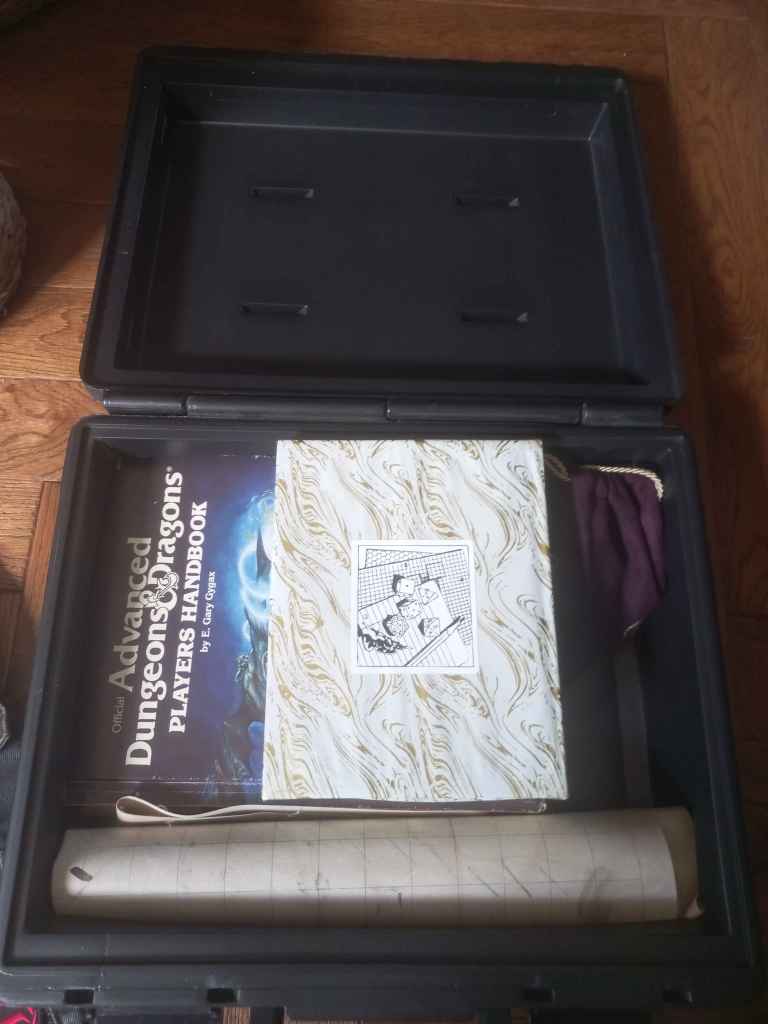
I’d arrived that morning, carrying a GW case stuffed with rulebooks and game notes. My belly was hungering for Sword & Sorcery action-adventure. The town made a pleasant impression, but such niceties had to be ignored. The location of St. Patrick’s Irish Club, host of the convention for several years, was charming—great Gaelic atmosphere, friendly bar staff, and dangerously cheap pints of Guinness. But this was no place for comfort. I was preparing for dungeon war.
The Carry Case of Doom
The crowds had gathered. RPG soldiers had come to crusade. A storm was a-brewing. This leaf-strewn town of Georgian beauty and green lawns was about to be dragged down into the gutter-level of Lankhmarian lowbrow imagination.
I’d enjoyed some chit-chat and met friends old and new, but in my mind I was preparing to inflict… the Setian Vault.
Session One: The Setian Vault
The Plan
The plan was simple. On Friday I would run two full sessions of AD&D, then drink beer. Saturday, I’d lay back and enjoy a few games as a player—the kind I rarely get to try—and then drink more beer. Sunday morning, I’d play in a single game before driving home to the South West, where a death metal gig awaited me. And, you guessed it… more beer.
Prep and Pre-Gens
Our PCs – Mostly Ral Partha
For Friday afternoon’s session, I plucked a low-level dungeon from my campaign milieu: The Setian Vault.
It’s important to bring pre-gens to a convention. Never waste precious table time on character creation if you can help it. AD&D is notoriously tricky for modern players to parse during chargen. They’re used to having all the pertinent information in one place. Reasonable fools.
So, in the weeks before Owlbear and Wizard’s Staff (OBWS hereafter), I generated eight character sheets at 5,000 XP each. I aimed for a spread of single-classed humans and multi-classed demi-humans. Levels ranged from 2 to 4. I made eight in total, giving the six players some choice and a couple of spares in case someone croaked—as can happen. That’s old-school gaming for you.
I’d also painted some old lead miniatures to match each PC, mostly Ral Partha I’d picked up from eBay job lots.
The Party
Alan — Thalric Greybeard, Half-Elf Cleric/Ranger (3/2)
Darren — Bharak Blackbraid, Dwarven Fighter (3)
James Knight — Elyra Vornshade, Elf MU/Thief (2/3)
David — Verrin Lusk, Human Thief (4)
Hannah — Emeric De Sablecroix, Human Paladin (3)
Mike — Osmund Vire, Human Cleric (4)
All the players were pretty hardcore TTRPGers. A few were gents with stories of playing 1e back in the day. James is a regular in my campaign and plays tonnes of AD&D. One player had mistakenly signed up thinking it was a 5e game. I chuckled. This would be different.
The pull of AD&D at cons seems to break into three camps: nostalgia, genuine appreciation, and curiosity. I’ll lean into these aspects more next time I run an old-school game at a generalist con.
The Adventure
I informed the players that they’d heard the following rumours:
Children often play in a cave below Adder Hill. There is a dark statue within that local kids dare each other to approach. A few weeks ago, some kids reported a large gate had appeared in the wall, flanked by two golden wands.
Several cattle have been found mutilated around Adder Hill. Drained of blood.
A farmer swears he saw a host of “naked goblins” roaming the area.
The Ophidian Package
The golden wands intrigued them. The players selected characters. Casters were given ten minutes to pick spells. I generally advise experienced players to run them, especially Clerics, because they must pick spells from the entire list.
Hannah (Emeric the Paladin) was elected party leader. David took on mapping duties. Miniatures hit the table. A marching order was formed.
We were off to the races.
Exploration Begins
Adder Hill received its moniker due to its resemblance to a snake’s head. Two caves are set into its stony face like eyes.
The party entered the right “eye.” Elyra scouted ahead using her infravision. She soon detected a large heat signature accompanied by hissing. She wisely withdrew.
“I guess we know why it’s called Adder Hill,” quipped a player.
They tried the other “eye.” There, they discovered a beast-headed statue holding a serpent in one hand and an inverted ankh in the other: the symbol of eternal death. The paladin detected evil radiating from it. To the south, the promised gate loomed: carved in the shape of a snake’s open maw, flanked by crude sconces bearing golden serpent-shaped wands that projected cones of light.
As I was rolling for random encounters, a player voiced concern:
“I don’t know about walking through a portal that leads god knows where. We should send something in first.”
Ah, a Tomb of Horrors veteran. A tear of joy welled in my eye. But I corrected him—by “portal” I meant an arched gate, not a shimmering teleportation field. It was a hallway, echoing with the sound of water.
They pressed on, finding a gushing font beyond. Elyra spotted a secret door to the west. Inside was a rank chamber filled with small serpentine humanoids. Combat broke out. The paladin was blinded by venom. Still, he and the dwarf carved through their enemies. A bit of treasure was found. Another secret door was discovered.
Deep in the Dungeon
Snakes, Statues, & Strategy
This led to a hall with a rotating medusa bust at its centre. Much discussion ensued. Eyes were covered. Tactics formed.
They passed through into a large room with two conical reliquaries. Statues with gemstone eyes flanked the area.
Elyra listened at the reliquary door. The party formed up—except Alan, ever the wargamer, who recognised the potential of an enemy flanking manoeuvre, he pushed his Cleric/Ranger to guard the rear. Smart move. Two groups of serpent-folk burst from the reliquaries to encircle the party. They were soundly defeated.
The PCs pried out the gem eyes and smashed open one statue to retrieve a serpent-shaped wand that functioned like a magical torch. They headed east.
They came upon a room filled with strange urns. Issuing forth from these was the sound of a thrashing sea. Elyra had a listen at a door inside, and the crashing sounds of the waves grew louder and louder until she became utterly deaf. Luckily a spell was to hand to cure the affliction.
Mummy’s Eggs
They came upon a large hall. At its centre: a dais with glowing golden eggs. A diminutive mummy patrolled it’s surface like clockwork.
The party concocted a plan: four players would grab the eggs simultaneously. We diced. Verrin Lusk rolled poorly. The mummy bit him, and as he staggered back the mummy was dragged from the dais, and rapidly expanded to become full size. Battle erupted. The party fled.
As per old-school rules, fleeing characters can’t map. They got lost through the dark chambers, the wail of the mummy echoing after them. After wandering, they found another snake-maw portal, then a clerical office. Within the latter they smashed a statuette and found a scroll hidden inside.
Eventually, they reoriented themselves.
Deadly Detours
A giant spider appeared via random encounter but was quickly dispatched. (The ranger’s surprise negation is a real asset.)
They found the spider’s nest, torched it, and located a secret door leading to clay pots marked with wax seals. Some contained treasure. They left the skull-marked one alone. Very wise, very wise.
Finally, they entered a sloped hallway (angled at 45 degrees). Ten serpent-men were slain. Then they entered a candlelit chamber filled with maps and notes—here, they uncovered a dark plot (no spoilers).
In the next room: giant snakes. Silence was cast at the rear of the room, where a tapestry hid a door.
A Dark Mistress
Beyond the tapestry the serpents queen cast a darkness spell on the corridor. The paladin and the dwarf rushed through the magically darkened space, chasing their quarry. Behind the tapestry, they came face to face with a beautiful sorceress who immediately cast Charm Person on the paladin, bidding him to defend her.
Now we had a duel on our hands: the party leader versus the boisterous dwarf. Luckily for everyone involved, the dice were not in their favour. Many swings were whiffs.
Meanwhile, Osmund the Cleric stepped boldly through the darkness, carrying the magically silenced tapestry. He hurled it at the sorceress, interrupting her next spell and nearly knocking her flat. With the spell disrupted and her surprise lost, the remaining party members surged in and dispatched her, sending her back to her vile master in whatever abyss had spawned her.
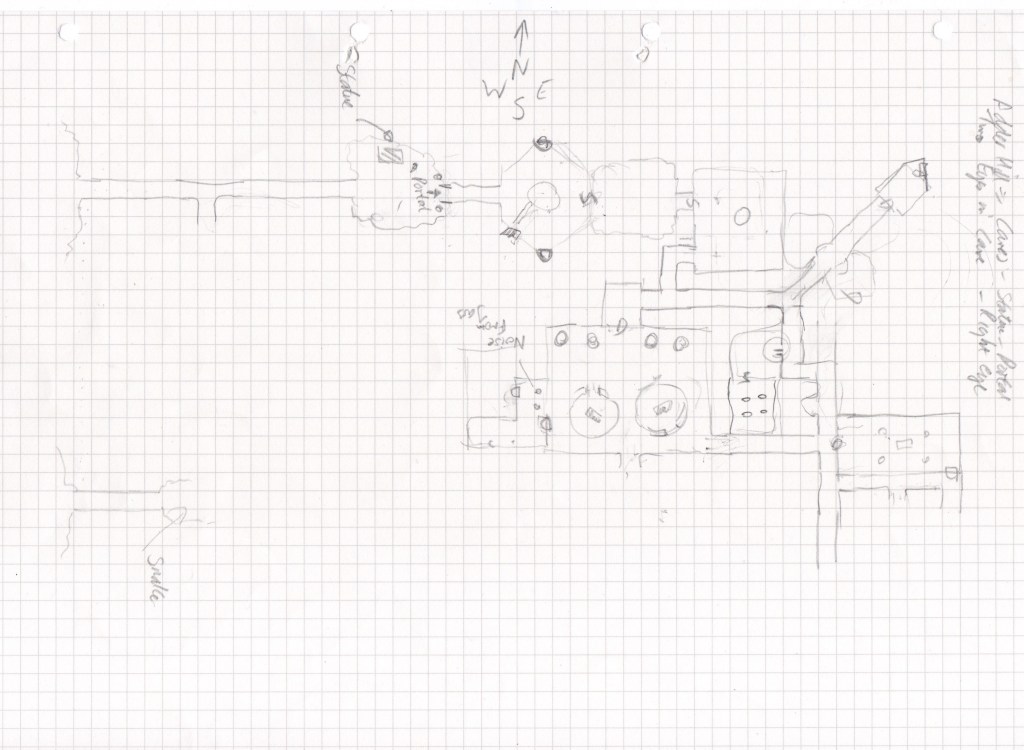
The Player Map
Winners
All said and done, it was a successful expedition and a damn good time. The group gelled quickly, the session ran smooth, and the players engaged deeply with the old-school style. There were laughs, gasps, and dice hurled with intent.
As tradition, I asked the players to vote on who they thought was the MVP—the most entertaining or effective player at the table. On the count of three, they each pointed.
The winner was Hannah, who played Emeric the Paladin. Doubtless it was her tactical leadership and inspired (if slightly treacherous) roleplay in defending her newfound dark mistress that secured her victory.
She was awarded a copy of Kothar: Barbarian Swordsman by Gardner F. Fox. Pure Appendix N Sword & Sorcery. Just the kind of reward a paladin might keep hidden under their pillow.
Summary of Session One
The party navigated my traps, puzzles, and monsters with grit and cunning. I was two pints of Guinness down and feeling fantastic. In an hour’s time, I was going where no man should—the Glory Hole.
In my next post, I’ll continue this saga of one of the most fun TTRPG conventions in the UK. Let the blessings of Saint Patrick shine upon you, and never speak the names of abyssal demons aloud!
You can read another play report of mine for Grogmeet 2025 here.
Do you have any advice for running 1e games at Conventions? I’d love to hear your thoughts in the comments below!
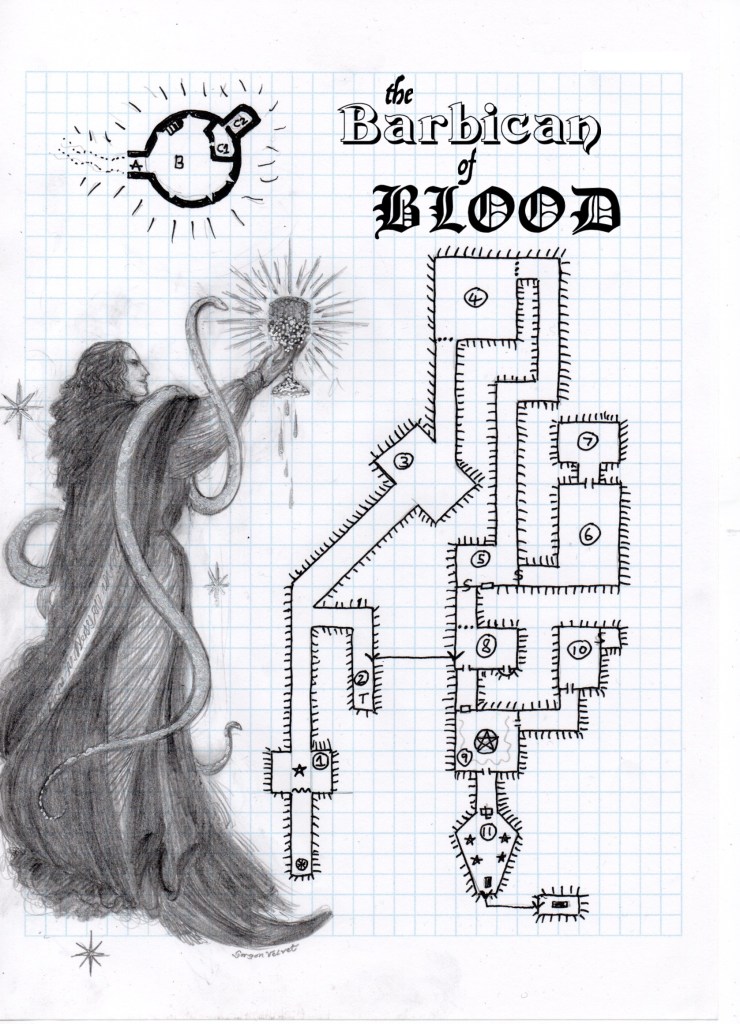
I’m happy to announce that my over-the-top, trap-laden killer-dungeon, The Barbican of Blood, was made a finalist in the second annual Adventure Site Competition by Coldlight Press. The collected eight finalists and winning dungeon have now been released as a PWYW document on drivethru RPG. You can click the image below to download it and bask in its dungeon crawling goodness.
Thanks to all the judges for their comments and feedback. My dungeon seemed to be divisive in the scoring, and that makes sense. It is baroque, linear, and wants player characters to die. It falls into the great tradition of Advanced Dungeons & Dragons killer modules; assholish, PC-slaying dungeons from back in the day. The kind spearheaded by the likes of Gary Gygax, then perfected by Rob Kuntz. It is also inspired by the ‘world first’ early modules of the Judges Guild – like Citadel of Fire – where an adventure location exists in a milieu; uncaring, brutal, and inflicting woe unto all who discover it.
I sat down to write the Barbican of Blood over two four hour sessions during the Christmas break 2024. I had recently re-read the three little brown books of the original game, and was wistfully day dreaming about the system’s untethered possibilities. Those who have read my ASC II entry and are familiar with the original edition will notice that the upper works use the castle encounters in 0e as their basis, where a Lord will ride out and challenge fighting-men to a joust. I settled on mixing this with a vampire lair as I’m a big Gothic fiction fanboy. I also wanted to use a monster with good reason to guard its lair with ridiculous traps. Vampires, being incredibly protective of their coffin (essentially the key to their immortality), was a perfect fit for the concept. A vampire’s charm ability allowed me the use of a Lord from 0e castle encounters, though transformed into a Renfieldesque slave.
The traps in the dungeon were something of a mental exercise. A test to see how far I was able push my creativity. I wanted to avoid traps like those found in later AD&D modules, and in supplements like Grimtooth. Instead I leaned towards the strange magical traps found in the labyrinths of the early Dungeon Game, circa 1976. I also enjoyed coming up with novel uses of standard spells in environmental traps. I recall the dungeon The Hyqueous Vault was very inspiring in this regard.
Restormel Castle. Basis of the Barbican.
My favourite trap in the Barbican is a cursed magical room. In it, all forms of melee will totally miss unless the character throwing the attacks calls out their own name. I had originally come up with this idea whilst rereading Elric of Melniboné by Micheal Moorcock. The impetus for this trap was the scene where Elric battles pig faced creatures, who can only speak a single word, ‘thing.’ In this scene Elric becomes enraged and suddenly starts yelling his own name whilst smighting the mutated chaotic creatures.
Hopefully you Dungeon Masters out there will find the elements of the dungeon useful. Even if you have to get Burroughsian and give it the cut-up treatment.
I will soon be taking the material and ideas from the Barbican of Blood and creating a less brutal, but larger module intended for tournament play.
Thanks to Attronarch and never_plays_elves for reading the dungeon in its early stages. Thanks also to Goldigger who ran a play test of the Barbican, his play report can be found here. The largest thanks goes to Gogon Velvet who illustrated the villain on the cover page, which you can see below.
There are still a few Easter eggs hidden in the text, which are as yet are undiscovered. Can you find them?
After having such a fine time at the Cauldron convention 2024, I’ve decided to try and attend more such gatherings and attempt to spread my bristling love for Advanced Dungeons & Dragons 1e.
My first such adventure of 2025 was Grogmeet, a meeting of – as the name suggests – a bunch of grognards. I’d like start my documentation of Grogmeet by giving a shout out to James Knight, who brought this fine and genteel meeting of minds to my attention. Cheers James!
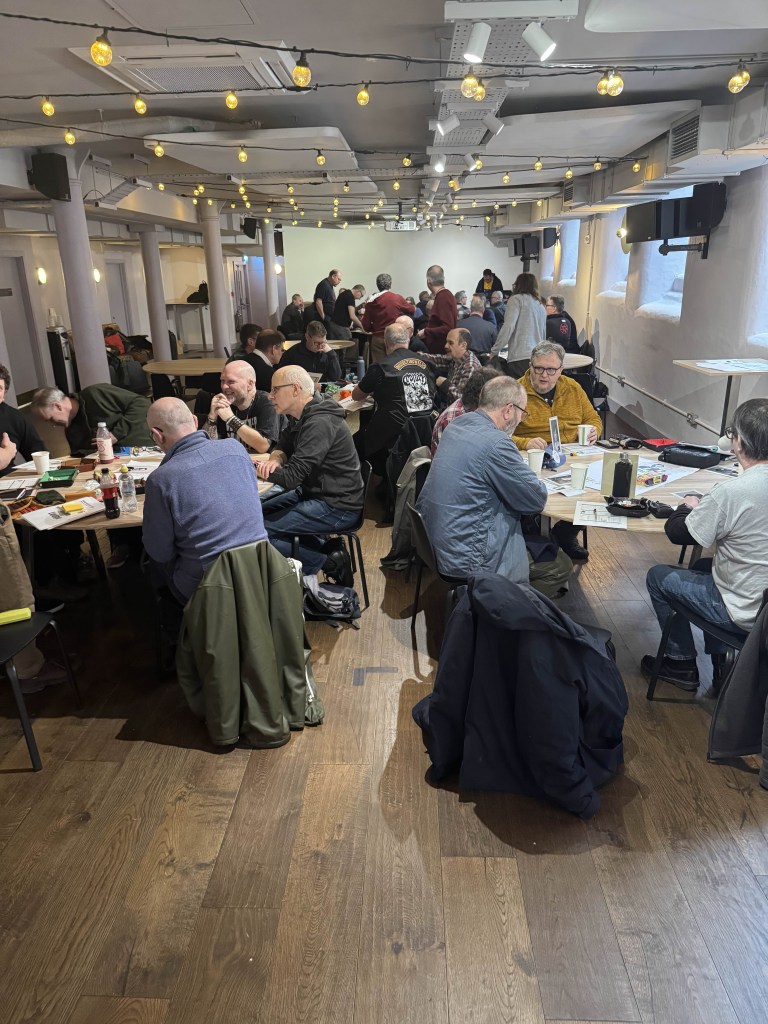
Grogmeet is self described as a casual meet-up for fans of the entertaining Grognard Files Podcast, and not really a gaming convention in the purest sense. However, with over twenty games on offer over a long weekend, with many different game systems being played, I will go so far as to say that it was indeed a convention, and a fine one.
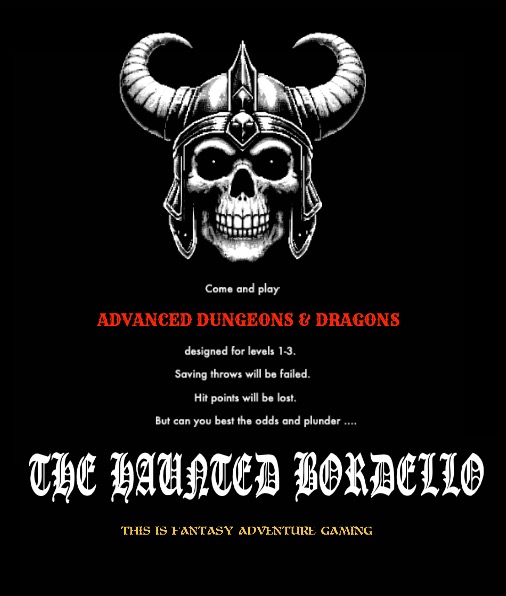
I booked my ticket in December and as a GM this cost me £5. Not bad. I decided to run the most recent dungeon, to give it a good play test with some fresh eyes. This dungeon is called the Haunted Bordello, and I hope to release it as a module later this year. I soon realised that I needed to whip up some sort of advertisement art for sign-ups. So with a hurried ten minutes, lo and behold, witness my last minute poster for the game. Marvel at its wonky aspect ratio:
The Manchester based event took place across two lovely locations: Whitworth Locke (a fancy hotel), and Fan Boy Three (a very nice hobby shop I have visited once before). I grabbed my dice, books, and binder and headed out on my three hour train journey Friday morning.
Friday
When I arrived there was already a tournament style game of Call of Cthulhu unfolding. Unfortunately this game was already sold out when I signed up, and during my arrival I soon became aware why. I witnessed several tables of grognards playing a massive combined scenario designed by Call of the Cthulhu 7th Edition designer Paul Fricker. All manner of chaos was unfolding before me; players were being dragged off to one side and given secret notes, then returned to different tables. From my observations, it seemed like there was some sort of mind swap invasion going on by the Great Race of Yith. It looked like heaps of fun, and I was more than a little disappointed I couldn’t get involved. But there is always next time!
Grogs Meeting
Later that evening I played in a Delta Green game ran by a nice guy named Wid. I believe the scenario is something published by a third party and Wid had altered it. Us player characters were all trapped in a snowed in gas station somewhere in rural America. There was a corpse in the bathroom, and some sort of computer next to the cash register running streams of random numbers. If you’ve not played Delta Green before, it’s basically Call of Cthulhu meets the X-Files, and sure enough, soon after the game started, shit started getting spooky fast. Over the course of the game we found ourselves trapped in the gas station with laser sights trailing us from beyond the road. Corpses started animating and spinning in the air. One of our team soon became mind controlled by the incessant numbers on every communication device. We had to solve the bizarre download coming in from beyond Sirius, before we all kicked the bucket. We did so, and somehow with not one of us dying. Huzzah!
This game was a lot of fun and it reminded me why I enjoy horror games as one shots.
Later that night there was much boozing and chatting at a local pub, and I got acquainted with some great guys. I got talking with a few guys who run a long term Tunnels and Trolls game that I’d love to play at the next event. The socialising was definitely a highlight of the weekend. The only down side to these events is that there is never enough time. You can’t play all the games on offer.
Saturday
Saturday morning I woke up with only a slight hangover and mooched my way over to Fan Boy Three for my first game of the day; A new Call of Cthulhu Gaslight scenario GM’d by Paul Fricker. Paul asked us not to talk too much about the scenario, as it was a play-test for a future book. What I will say is that it was a great distraction from my hangover. There was much sawing off of shotguns and chairs thrown as improvised weapons. I will apparently get a play-test credit on the document when it is released, which is always nice.
Come midday I had to rush across the freezing gulf of the city for the start of my own game. I grabbed a sandwich and a snickers bar and managed to scoff these down with not a moment to spare. I set up my table and my players began filtering in. I handed out my nifty fake golden rod character sheets and we all introduced ourselves. I gave out a few hooks to the location and we were off. Playing Advanced Dungeons and Dragons.
The Haunted Bordello
There was Malitar Kreen, a half-orc fighter/assassin. Eljas Tammi, a human fighter armed with a glaive. Helmut Scond, a lithe half-elf thief. Then cunning Fulrad Falk, a human illusionist. Finally there was the human cleric Isto Jantuten, worshiper of Ilmatar the Mother Goddess.
The characters arrived at the wailing wood after travelling across the vale of Tarn. They soon heard in the distance some strange barking wails they had heard rumours about. Ghosts? Who knows. They marched through a woodland trail and soon discovered a bluff with an old ruin atop it. The half elf thief climbed up alone and stole a gander. He returned with news that a few rough looking men were sat in the round tower at leisure. The party climbed up and surrounded these fellows. After the illusionist tried to hail them, the party lost their edge of surprise and the bandits nocked a few arrows. Charges were made. Arrows were loosed. The party slew two of them outright. The other one fled down a trap door and into a nasty arrow trap.
After some searching on the ground level they found a second entrance into the dungeon. A coal shaft of some kind. The thief tried to descend it but slipped in the rough soil, and tumbled down the slide and into the nest of three nasty badgers! With his weekly rations thrown to the ground he managed to get out without so much of a nip. The party then went down into the dungeons proper. They found the pleasure rooms of a sinister Bordello, long abandoned. After a bit of snooping around they found a secret door in a wash room. Beyond this there was a viewing room with many one way mirrors overlooking several boudoir. Inside was a shadowy figure of pure malice. After watching him for a while they learned he roamed from mirror to mirror. The thief took a chance, sneaking past him. He managed to steal a scroll from a shelf at the far end of the room. And narrowly avoided contact with the apparition. The party went on exploring the rooms. Unfortunately, a turn undead attempt in one of the bedrooms caused the shadow to attack through the mirror, slaying the offending cleric.
They continued on a little, killing a squad of goblin guards and two orcs fighting over a halberd. Falling into a pit trap sent them back to town for a few days rest. Later they returned to the Haunted Bordello with a new companion; an elf fighter/magic user. They had an interesting encounter with a complex portcullis trap that took the life of their illusionist. Finally they found a fine throne room, and broke the chair from the floor only to be attacked by a mess of giant rats. No match for their power, the party slew the rats and carried their treasures back to town. And glory to them says I!
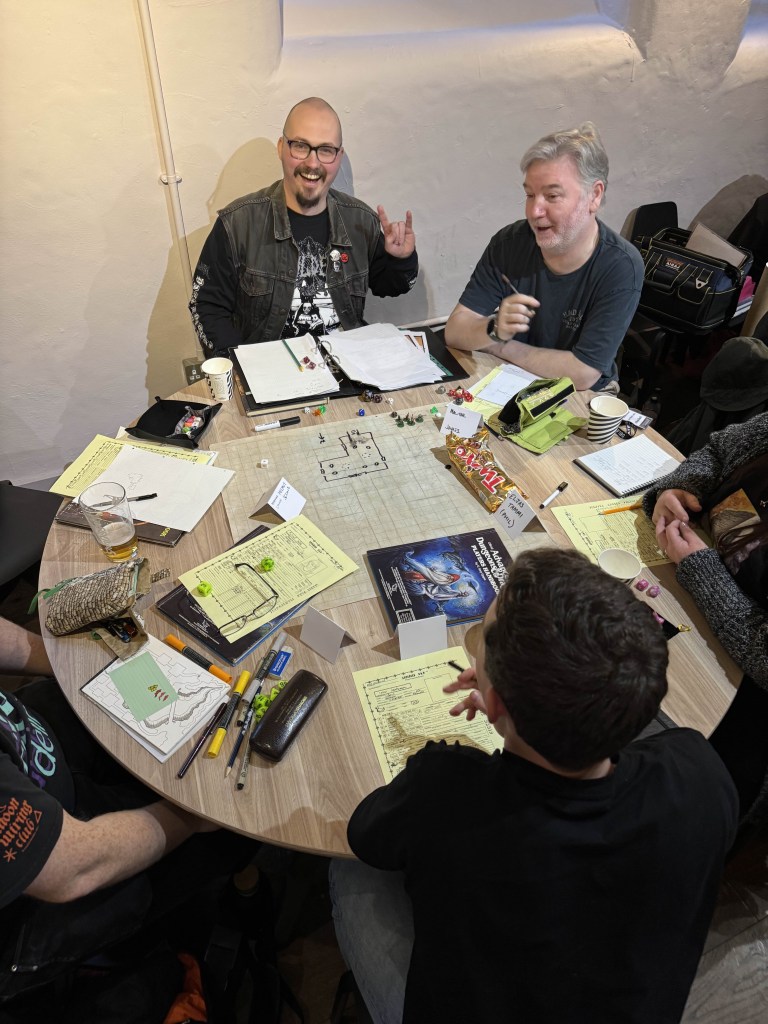
It was great sharing my enthusiasm for 1st edition. Some of the players had played the system as kids, and it was like a hit of nostalgia for them. Some had never played the game before. And others were regular AD&D enjoyers. Some of the players expressed excitement that we actually got to use the grappling table and the lift gates percentiles, which made me chuckle. I also now have a real appreciation for the golden rod character sheets. Using them to roll up the pre-gens forced me to take closer looks at carry capacity and non-lethal combat rules. Good stuff.
A group of Adventurers surviving the Haunted Bordello
After my game I went back to the station for the long journey home. There were so many interesting games on display at the event, that I can’t wait to go for the next one to try out something new. The verdict is in, Grogmeet is a hell of a lot of fun and stocked with great people. I look forward to the next one!
I’ve been fascinated by the various methods Dungeon Masters use to tackle mass battles for some time, from hand waving them as a background event to the use of one roll resolutions like BECMI’s Warmachine. I’ve always been most interested by the use of miniature figures and wargaming rules to resolve these battles, having originally come into table top gaming by way of Warhammer Fantasy Battles.
So, several months ago, I made a conscious decision to try out all the various war gaming rules I’ve seen recommended for Advanced Dungeons & Dragons (my current rules set) until I find one that best suits my current campaign and tastes.
I have currently played through the introductory scenarios in the 1E Battlesystem supplement solo and found it has some interesting mechanics and integrates well with standard Ad&d play, but the attack resolution mechanic is just a bit too bloated for me – it has a massive table that to use you must first calculate an Attack Rating, and then do arithmetic each attack and search through the many rows to find the casualty number. Not too bad really, but after a couple of rounds of play it becomes tedious and saps the excitement out of the game.
After that I set out to try all the other methods; Chainmail, Swords & Spells, Delta’s Book of War, and regular Ad&d combat resolution scaled up.
This week one of my players was unable to make my regular game, and so with two fistfuls of painted minis I set up a battle for my two players, and we did a bit of play testing; player vs player with me judging.
This is a write up of that game, and a description of how I ran it.
The Armies
I decided to roll up two humanoid forces using the 1e Monster Manual. My reasoning was that if I want to use wargaming rules in my campaign there would be plenty of asymmetric armies cropping I play. The random generation method of the MM seemed a good way to test how Chainmail handles such unbalanced battles.
I opted to use Wood Elves vs Goblins and rolled up their numbers and weaponry as if it were a random encounter in the wilderness. Then I had to make conversions, matching up weapons, and lumping the forces into sets of 1:10 for their model ratios.
Partially the reason I chose these two monsters was because in Chainmail one is clearly superior to the other. I decided to make large changes to the way they present in Chainmail rules, and have them more in keeping with the statistics found in the Monster Manual. More on these changes later.
Goblins
200 goblins with spears and slings – 20 Light Foot models with spear and sling
50 wolf riding goblins armed with morning-star – 5 Light Horsemenwith morning-star
30 strong goblins (orc) with swords – 3 Heavy Foot
Elves
40 wood elves with bows (and sword) – 4 Archers
40 wood elves with spear – 4 Heavy Foot
2 Fighter Lvl 1
2 Fighter Lvl 2
2 Fighter/MU Lvl 2/1
Rule Changes
My plan is to play this as if it were in an Ad&d campaign. The rules in Chainmail are not really fit for purpose as given. Most obviously, the Chainmail rules were written before 1e, and the abilities for these creatures were both vastly changed by 1978. Some of the strange differences found in Chainmail include Goblins hitting as Heavy Foot but defending as Light Foot, and all elves constantly being invisible and all carrying magic swords. These are rules designed to counter other fantastical beasts in the Fantasy Supplement, and they have no use for me.
These are the main rule changes I made:
Goblins are light foot.
Elves fight and move as they are armed; spearmen are Heavy foot, and bow wielders are Archers.
Classed NPCs fight and move as per the rules found in Anthony Huso’s updated cheat sheet for chainmail, which I believe uses material from Delta Book of War.
Elves can split move and fire.
Elves are invisible until they first attack, but not after that. This follows how they are written in the monster manual where they are able to blend in with grass and trees until they attack.
I am using simultaneous initiative for this game, which means the two players write down their orders and I adjudicate the moves as if they were concurrent.
I use the alternative rule for Morale, pg. 17 Chainmail; Instability Due to Excess Casualties.
Spells are identical to how they are found in Ad&d, and so only as effective as they might if all the men were individual tokens. These spells take effect in the Artillery phase.
Slings are the same as found in Ad&d RAW: 20″ range, ROF 1.
I created a scenario with a simple goal. The goblins need to spend two turns taking a ruin. The ruin is atop a hill and if they spend two concurrent turns on it unmolested, they descend into the dungeon below and win the scenario. The elves must stop this from happening, and either wipe them out, or make them flee, or hold them off until the end of the twelfth turn.
1. The yellow sheet is the hill, the black lines are the gradient of rising levels: moving uphill is at half movement, you cannot charge uphill, it blocks LOS.
2. The white sheets are woods; cavalry cannot pass, moves are at half pace, they block LOS.
Goblin Set up
The goblin player set up on the southern edge with this order of battle:
the five wolf riders.
fifteen goblins in a single unit, two ranks deep.
the three strong goblins on the left, as a unit. Five goblins on the right in a single unit.
Elves Set up
The elf player set up on the northern border with this order of battle:
S. Spearmen A. Archers 1. Fighter 1 2. Fighter 2 FM. Fighter/MU
The set up was written in secret and handed to me, then I placed all the units on the table. The elves were invisible and the goblin player had no idea where they were. The photos below were taken afterwards, during the game I lined the elves table edge with die as tokens, and told them which ones represented what. I didn’t think this would be clear to follow in a blog post, so I reshot the battle afterwards.
Turn 1
Goblin ranks at the top, Elves at the bottom, ruin in the centre atop a hill.
Goblins orders: Wolves rush and circle the woods. Strong Goblins move towards hill. Remaining Goblins move into woods towards the hill.
Elves order: March into the woodland as a single unit, at the fastest pace possible.
movement complete
The elves all moved in a single formation, but since the fighters move as Armoured foot they didn’t quite make it into the woods. The wolves have a very fast move, but used some of it pivoting.
Turn 2
Goblin Orders: Strong goblins and wolf riders take the hill. Other goblins get forward as fast as possible.
Elves Orders: I didn’t make it to the woods? Get inside those woods!
End of the round there was no firing with all the missile troops in wooded areas. The wolves pivot and get to the base of the hill, they know they will reach the top next turn, though they are totally unaware where the elves might be.
Down into the dungeons!
Turn 3
Goblin Orders: Wolves and strong goblins take the hill, the others follow up behind as quick as they can.
Elves orders: I want the archers on the edge of the wood looking at the hill. The Fighter/Magic users will go towards the hill. The spearmen and other fighters will move directly south and try to exit the woodland, next turn they will turn to face the hill.
Dog meat
The wolves take the hill, their leader fast footed behind them. As they reach the top of the hill however, the invisible archers catch sight of them at the edge of the forest. The Elves have moved almost 50% of their allowance, so that means they can make one round of shots.
They kill thirty wolves and their goblin mounts in a hail of arrows. The elves are now visible in the tree line. The remaining wolf riders see their fallen comrades and must make a morale check. The player fails the roll and the remaining wolf riders break and are removed from the game.
Turn 4
Goblin orders: The strong goblins shout back for their men to reach the hill and ready their slings, they charge forward.
Elves Orders: The archers will remain and pepper the hill. The Fighter/MU will move forwards, invisible. The spearmen and other fighters will take the hill from the east, invisible.
orders from Mordor
The strong goblins have run too far forward, moving closely to the written orders, and the elves shoot into them. Luckily for them, only ten of them die, they later succeed their morale check. The other goblins are slowly climbing the hill, their 9″ movement significantly reduced. The elf spearmen, keeping pace with the armoured foot of the Fighters, still struggling their way through the woodland. The two F/MU go towards the hill, still invisible.
Turn 4
Goblin Orders: Those light foot will take the top of the hill, the smaller unit screening the large one, they will shoot their slings into those archers. Strong goblins stay where they are.
Elves Orders: Archers are shooting at the powerful goblins in front. One magic user will use Light, and target the commander of the heavy goblin’s eyes. The other magic user will move invisibly towards them. Those spearmen will get up the hill.
Bumrush
The goblins now have the hill, if they can keep it by the end of turn six then they will enter the dungeon complex and win the scenario. The Magic user closest to the woods on the left uses Light on the goblin leader, he fails his spell save, and effectively reduces one of the strong goblins effectiveness down a grade to light foot in all the confusion. But now he’s visible to the goblin player. The elves shoot into the strong goblins but cause no deaths. The goblins return fire with their slings and cause no injury. The battle continues.
Turn 5
Goblin Orders: hold the hill and shoot dogs!
Elves orders: The spearmen and Fighters take the hill. The archers shoot. The magic users charge the ones atop the hill.
The magic user charges and becomes visible. The powerful goblins die from a volley of arrows. The spearmen finally reach the hill. The slings of the goblins still do no damage. The fighter/mu kills ten goblins in the melee.
Turn 6
Goblin orders: shoot and hold.
Elves orders: the second F/MU will close to combat. The spearmen will do the same. The archers will fire into the rear mob.
Both the goblins and elves had to shoot over the heads of the melee as in the turn before, and this really reduced their effectiveness, but this turn the goblins got very lucky and wiped out thirty elven archers. During the morale phase the last ten archers fled. The spears and F/MU didn’t have the movement to mount the hill or get into combat. Its very tense.
Victory – Turn 7
The goblins begin to enter the complex and win the game. As I was running the game I totally missed this, and we played another round, caught up in the drama of it all.
Goblin orders: I split my rear unit into two and fight on.
Elves orders: If the spearmen can combat the back rank, do that. The fighters will fight the front rank.
The spearmen are able to meet the back unit of goblins, and the two effectively wiped each other out. The spearmen lost three, and the goblins lost three, then they both failed their morale checks. The elven fighters and fighter/mu’s were totally untouched by the goblins and easily wiped them out.
The remaining sixty goblins managed to escape into the dungeons below the ruins of the chaotic temple.
End
This was an incredibly fun game and only took about an hour and a half to play through. Afterwards the players asked if the levelled elves could descend into the dungeon to hunt the goblins. I think that sounds like a great idea, and will write something up for that.
The modifications I made seemed to help bring the rules into line with the goblins and wood elves of the Monster Manual. The rules that I used from the Huso Chainmail Screen made the fighters really powerful though. They fight as two armoured foot per level, which allowed them to smash through goblins like they were paper dolls, whereas in Ad&d they would only have two attacks a round vs the goblins, not twenty.
In all this seemed to work well and I might well use these rules to play out mass battles in the future. But I would like to run the same scenario using a swords and spells first.
I hope to play another game soon and post more play reports like this. If you enjoyed this, or have any comments or questions please get in touch.
During the last two months I have been thinking about starting a second Advanced Dungeons and Dragons campaign. This campaign would be played in person, around a real table, which is quite a rare way of playing for me these days. The main reason for this is that I’d like to spread my enthusiasm for the game, and maybe generate a bit of interest for the old game in my local hobby scene.
This blog post is the collected notes of a brainstorming session I had whilst attempting to invent a purely Gygaxian Milieu for this new campaign. It is Gygaxan because it takes into account the assumptions generated by the three core books of AD&D, and is taking liberal inspiration from the Appendix N fiction of the Dungeon Masters Guide.
I eventually decided not to use this milieu, for reasons I will state in the conclusion of this post, but I thought it might make for interesting reading for new Dungeon Masters looking to create a world of their own.
Beginnings
To facilitate speedy development of this campaign world, so I can begin playing as soon as possible, I have opted to use an existing game board, bypassing much of the labour required to create a campaign map. Using a previously made map is also a tradition in itself.
The map should, at least in part, do some of the developmental work for me. If regions are named, and there are cultural clues in settlement names, all the better. This will all be valuable information in generating ideas.
Owing to the previous point, I have deemed the outdoor survival map an inferior choice. It contains only terrain hexes. No geographic information. No settlement names. No Gygaxian fluff. Also, the outdoor survival map does not have hex numbers which would aid my writing.
So, after searching through a bunch of old hex and chit wargame maps, I found the board from the 1978 SPI game Swords & Sorcery. The pdf for the map and rules can be found for free at the company’s website: https://www.spigames.net/rules_downloads.htm
Swords & Sorcery map by SPI games
The excellent thing about the Sword & Sorcery game board is that its features fit very neatly into the assumptions of AD&D. In fact, whilst flipping through the game’s rulebook and design notes, I found that the game world was originally created for an AD&D campaign. Many of the adventurer cards within this game are converted player characters apparently. This fact made me excited.
A glance across the map will reveal a litany of obvious tropes pulled directly from Appendix N. Sinkholes, altars of evil, old gods, orc towns. The map also uses hex numbers. I became very excited.
I printed and laminated a large version of this map and prepared myself for play, reading the section of the Dungeon Masters Guide entitled ‘The Campaign,’ and began brainstorming.
Rules for Creation of this Milieu
An emphasis on using the three core rulebooks of first edition AD&D.
Playability takes precedence. Do what is necessary and move on.
The campaign will use 1:1 time and an open table.
Inspiration is to come chiefly from Gary’s Appendix N, with a leaning towards the usually avoided sources (Leigh Brackett, Jack Vance, Gardner Fox, Edgar Rice Burroughs, Michael Moorcock, H.P. Lovecraft, myths, etc.) The less of Tolkien, the better.
Map Scale
The first thing to deal with is the map itself. It is beautiful, even if there are many jokey references – Evalyn Woods I’m looking at you. The issue that becomes immediately apparent is the scale of the thing. What scale should its hexes be?
The geography of the river and capital suggest a scale far too small than is appropriate for a long term campaign. In fact, the game Sword and Sorcery is scaled to a valley, with each hex being enough space to contain a cohort of men. At this scale the map could be traversed in a single day. This hardly lends itself to a good campaign map. The map must have depicted a local area akin to the maps from T1, albeit more detailed.
Given that a campaign map should ideally cover large swathes of land, I will try my best to see if I can scale up this map to be usable in a longer campaign, given the topography available.
I have therefore decided that each hex will represent three game inches. This equates to a league, or three miles. This also pairs up well with the sub hex searching mechanics found in the Dungeon Masters Guide for when PCs decide to ‘clear’ a hex.
Whilst the scale of one league means that the map is not massive, I can design a scale of increasing deadliness as one travels north on the map. Hopefully this lends it some longevity as a region of adventure, even without the usual massive world map.
The 3 mile scale gives us a fairly substantial sized region, but makes some of the features appear strange. The river depicted is suddenly very wide, an estuary perhaps, and the bridges crossing it are colossal, six miles wide in some instances. I fight the urge to give up on this project and power through regardless. We are playing a fantasy game so we can hand wave away this scale issue with a simple piece of world building: the giant bridges are structures of an elder race of Titans. Job done.
The other features with preposterous proportions are the two cities in the north and south. Rather than having the walls illustrated represent literal city walls, in our version of the map they are ancient battlements akin to Hadrian’s wall, built to keep out the nasty chaotic barbarians and such. The city hexes are settled lands.
Movement
Whilst traversing roads, movement will be at 24 miles per day whether mounted or walking. That’s eight hexes a day. Horses may move at double pace but will have increased surprise odds.
When moving off the roads, we will use the basic inch movement in miles as per the Players Handbook. In clear terrain the speed can be used twice a day. In the other terrain types the movement speed can be used once. In the mountains it is halved.
E.g. a party with a movement speed of 6” can traverse four Clear hexes a day. The same party can move two hexes of Forest a day. It takes them one day to move through a single mountain hex, if possible.
The map has several regional delineations (the red dashes) that we can use to aid in our brainstorming. We will make them political areas of control and assign them some cultural attributes, making sure to keep in mind the needs of the campaign.
What are the needs of the campaign? AD&D is human centric, with demihumans being isolated and strange. There is a general mediaeval flavour to the system that has to be attended to, but its influences range from Nordic, Hyperborean, Sword and Sandal, and of course Planetary Romance. There must also be locations that attend the various races and classes. There need to be places for druids, monks, Paladins, assassins and magic-users to train.
Luckily the designers of the board game we are using have similar influences, so next I assign some brief lore to the regional areas in a way that can be player facing, so as to inspire exploration and make later placement of adventure locations easily themed.
The World
The world is a large planet with a red dying sun and two moons. Civilisation is small and weak, humanity is the most numerous intelligent species on the surface, but still small in number. The old technological empires fell long ago, their technologies lost or hidden and rediscovered as magic. The Lords of Chaos influence the world through the beastmen, and much of the planet is wasteland.
The mapped area is the northernmost tip of the world, close to the swell of chaos, where the underworld burrows up most frequently.
The Empire
This is the northern tip of a feudal society. To the South, for many hundreds of leagues, the green pastures are governed feudally under an immortal Emperor, whose vassal kings rule over the largest swathe of cultivated land on the planet. The city of Urf Durfal is the northernmost city under his banner, but has become corrupt and decadent, influenced by the treasures and magic dredged from the chaotic barbarism beyond the Northern Gate.
Urf Durfal Population: 10,000 Alignment: Lawful Neutral Leader: King Asmond the Grey, LG Fighter 10 Region encounters: 1:12 per check – 1:4 a patrol – Otherwise an inhabited area random encounter in plains.
Aardvark Wallow
These broken steppes are the hunting ground of several nomadic tribes of horse folk. They winter at their mountain capital in yurts. Their seasonal raids against the empire continue throughout the summer seasons, and they are often paid as mercenaries against the Empire’s southern enemies.
Strakhenville Pop: 1-3,000 in winter Alignment: Chaotic Good Leader: Altan Khan, Fighter 10, CN Region encounters: 1:12 per check -1:4 a patrol of steppe Nomads MM pg 68. -Otherwise an inhabited area random encounter in hills
Capella
A sea of rough scrub and tundra. Small villages litter the old road. The area is ruled by a petty bandit king named Sirius who wanders the waste from his gilded caravan. His ragtag soldiers harass the road, extorting tolls and protection money from travellers, or taking to outright thievery.
Region encounters: 1:12 per check -1:4 a patrol of bandits MM pg 66. -1:4 a merchant caravan MM pg 69. -2:4 inhabited area random encounter in plains.
N’Dardia
This wasteland is said to be ruled from a secret Keep hidden upon the great flat karoo. The leader of this keep reigns not with armies, but with hidden assassins. Some call him the old man, some call him the Second Emperor, others call him myth.
Region encounters: 1:12 per check On a road -1:4 a patrol – 1:4 bandits. – Otherwise, uninhabited area random encounter in suitable terrain.
Ka-Chunk
Shielded by the perilous broken steppes lay an isolated religious society of great antiquity, best known for their Amazonian warrior women. This region is ruled by the religious city-state Corflu, whose ancient oaths bind them to guard the haunted tomb of the damned. In the north is the hill of Avalon, where the tomb of Arthurius is said to lay hidden, and from whence he will rise again when the planet is in dire need.
Corflu Pop:4,000 Alignment: Lawful Good Leader: Archpriest Simeon, LG Cleric 15.
Region encounters: 1:20 in per check in cultivated area – 1:4 a patrol. – 3:4 inhabited area random encounter in plains. Otherwise 1:8 per check -uninhabited area random check in hills or mountain
The Swamp
A vile area said to be ruled by a vicious troll king. No right minded man travels there.
Region encounters: 1:8 per check -Uninhabited area random check in marsh
Minotaurus
Home to barbarian tribes, raiders, berserkers, and beastmen, this wasteland region is shunned by the lawful, for venturing into it’s barren flats is sure death.
Region encounters: 1:8 per check – Uninhabited area random check in scrub or broken
Endore
The King of Endore rules from castle Grund, aided by a council of nine arch-magi. The warrior caste of Endore, mailed knights on chargers, see themselves as the last bastion of law, and lord over a society of serfs. The Endorians are isolationist and paranoid, many of their guilds and societies are said to be infiltrated by agents of chaos. Their wars with Krasnia and Zirkast are legendary.
Castle Grund Pop: 2,000 Alignment: Lawful Good Leader: King William, LG Paladin 6
Region encounters: 1:12 per check – 1:4 a patrol -Otherwise inhabited area random check in plains
Rhiannon
This forest is said to be inhabited by a confederacy of half-elves and half-orcs, outcasts led by a mysterious figure called Dylan.
The mountains in the west are famed in Folklore as the site of the downfall of the Lord of Law, Rhiannon, who is said to have betrayed the elder gods by handing their technologies to the snakemen of old.
Region encounters: 1:8 per check – inhabited area random check in suitable terrain
Evalyn Woods
A great expanse of woodland and dense forest. They say an elven citadel rules here, working in alliance with a circle of druids who keep the mysterious Fountain of Health. The rangers of the circle keep back the forces of chaos and strive to maintain balance. The bards of this region sing of a legend, that the once and future King of the North will be crowned by the lady of the pool.
Region encounters: 1:8 per check – Inhabited area random check in forest
Neitherworld
Woe unto he who doesn’t pay tithe to the self proclaimed Black Baron who rules here. A vampire of ancient lineage who rules from a ruined tower in the blackened hills.
Region encounters: 1:8 per check -1:4 on the road of a patrol of vampire thralls (men) -Otherwise uninhabited area random check in mountain
Nattily Woods
A dark and gloomy woodland, known to be haunted by all manner of beasts. They say there is a city of wild men presided over by a werewolf king.
Random encounter: 1:8 per check – uninhabited area random check in forest.
Vynar
In the high North forest there is said to be a ruined city ruled over by a terrible ancient dragon.
Random encounter: 1:8 uninhabited area random check in forest.
Krasnia
Some of the knights of old fell to the seduction of chaos. The kingdom of Krasnia was where they drew the dividing line, segregating themselves from their brothers in Endore. There are two leaders here, the Dark King Andros leads his knights from Battleaxe Stronghold, and a city of barbarians and beastmen is ruled over by the sorcerer Zardoz.
Balkathos Pop: 1,200 AL: LE Leader: Zardoz, LE Illusionist 10
Random encounter: 1:12 inhabited area random check in suitable terrain.
Outer Krasnia
They say the true power behind Krasnia comes from the mountains, where sunken cities, whose stones were hewn before antiquity, harbour the secrets of demons.
Random encounter: 1:8 uninhabited area random check in mountain.
Dwarfhaven
Hidden deep are the old halls of the Dwarf Lords, who were long ago destroyed by the forces of chaos. Their ancestors roam here still – haunted, bleak – mining metals from the hills and seeking their legacy.
Random encounter: 1:8 uninhabited area random check in hills.
Kanathar
A bleak region of barren scrub and dust. The old tribes found here war against their distant cousins east in Zirkast. The Kanatharians are recognised by their tall bronze helms, which they capture from tombs found in their region. They share the deadened waste with lingering ghouls and terrible bat faced goblins.
Random encounter: 1:8 per check -1:4 berserkers -1:4 goblins – 1:4 undead table -Otherwise uninhabited area random check in scrub.
Zirkast
Old blooded reavers and slavers dwell along the river, jealously guarding their lush capital, which is shielded from the bleak northern winds by a marble gorge. Jarl Ulfr rules the region from his iron fortress and sends his river raiders south.
Random encounter: 1:12 -1:4 buccaneers – Otherwise inhabited check for suitable terrain
Ithilgil
Known as the passage to hell, this area is currently under the dominion of Uldrak the Chosen, a terrible foe. He has united four orc clans into a force bent on destruction.
New Orc City Pop: 900 Orcs AL: LE Leader: Uldrak the Chosen, CE half-orc Assassin/Cleric 5/5
Sorcerak
The gloomiest forest, where light hardly penetrates. Little is known of the area, but many beastmen and giants roam the darkness, where they say a terrible altar to evil lay forgotten.
Convivia
The evil altars and temples of Rykalla poison the world with their followers. The terrible giants of the mountain descend, trading secrets from the depths of the earth. Slaves are sold here in their droves, and the sages say that there is a citadel of brass in the mountains.
Graumthog
A bleak tundra of ragged rocks where degenerate yetis roam. There is said to be a citadel of ice where the ancient frost giants dream hazily of their forgotten empire.
Intas
The gateway of evil is said to be a black tower under the dominion of a lich. This lich was once a magus who sought to control the powers of the citadel of blood, but was consumed.
Citadel of Blood
When the Titans ruled the planet, bowing before their elder gods, it is said they built a fortress from the bones of their vanquished enemies, and filled a moat with blood. This relic still stands today. What treasures the Citadel contains no man can say, as none have returned from that Isle of doom.
Bridges
The massive bridges of the Titans are mysterious. Some stand nearly one hundred feet tall at their apex. It is well known that trolls lair in their hollow piers, and often extort tolls from those passing through, hiding away their coins within the deep shafts inside the bridges foundations.
Random Encounter: 1:4 whilst crossing. -1:2 trolls – 1:2 gargoyles
Starting Area for Play
Now that is out of the way we must choose a starting area. Somewhere that low level PCs can dungeon delve and return to civilisation quickly.
There are a few notable locations that jump out straight away:
Hex 1752: The Bottomless Plungehole. This area sounds like it could be a perfect caves of chaos megadungeon. It’s placement on the map however, in the broken steppes, is probably a bit too dangerous.
Hex 1931: over one of the giant bridges, at the far edge of Endore’s controlled lands, a town on the edge of evil. This could work, there are lots of areas to probe into from here.
Hex 3443: on the crossroads next to the hill of Avalon, a day’s walk to the tombs of the damned, which again sounds like a great place for adventure. Perhaps a village with a shrine to Saint Arthurius. The city of Corflu nearby, and a road to help movement speed. This could be the perfect area.
I think that Hex 3443 is the preferable location. It has the Tombs of the Damned within a days journey and that would be our starting megadungeon, with perhaps ten levels. The perilous mountain roads leave a good opportunity for bandit encounters. The city is in a good distance for getting to training and buying supplies.
What’s Next?
development of a starting village, rumours and random tables.
the first two dungeon levels of the Tombs of the Damned.
5-10 local lairs and ruins in the immediate play region.
Then play can begin.
Conclusion
This was one of several brainstorming sessions I undertook during October and December. Finally I decided against using this map and material because I just couldn’t get over the strange topography. The rivers being massive yet called streams was frustrating to me. The map is very nice though, and perhaps this map can later be used as a smaller regional map in my campaign. I now have the thing printed out so I might try playing the wargame Swords & Sorcery.
I eventually decided on using the game board from Lords & Wizards for my campaign map, another chit wargame from the seventies. That brainstorming project has progressed much further than this one, with a town fully stated out and four dungeon levels spread across three locations. I won’t be sharing that work here though as players may well read it.
Whilst writing this I was reading several inspiring works. Rob Conley’s How to Build a Fantasy Sandbox completed on kickstarter so I ordered his Blackmarsh setting. Echoes from Formalhaut #11 by Gabor Lux also came through the letterbox. Both have been very interesting reading and have inspired me to no end.
I hope this rather rambling blog post inspires someone, somehow. I’d love to hear how others have made their own milieu. If you know of any good resources, or blog posts of your own, please post them as a comment below. Here are some I have found useful: