DL Campaign Session 5

Player Characters 

  • Malik – Fighter 1 – a Thalazian blade master, with a spiffing helmet decoration. 
  • Cleitus – Magic-user 1 – a thin young man with a fascination for the moribund.
  • Aetos – Magic-user 1 – An Urr experimenter in the arcane. 
  • Eos – Assassin 1 – a scrappy killer in the making. 

Retainers 

  • Antifus – Ranger 1 – a wise walker of the wild.
  • Brutus the wardog.
  • Mamercus – fighter 1 – likes a drink, likes a fight, in for a penny, in for a pound. 
  • Dill – man-at-arms – wild red haired warrior. 

The night was long and cold after the parties return to Rubble Diamond. Many things occurred during the downtime period between games, things that shall remain secret. The party, led by Jassan, had a meeting with the elders of the village. It was decided that the sword of Gunther Wyrmslayer should be presented to Lord Blanbot in the north. Jassan and Aetos spent the evening in the luxuriant villa of ruling merchant and factory owner Bianor. They emerged in the morning looking rather worse for ware, and not uttering a word of what occurred within. 

The party discussed what they would do next. Jassan would stay behind with the sword, while Eos proposed the party help him with with a profitable job. Eos had been given a contract to assassinate a wizard in Grand Alum and retrieve his spell book. For this he would gain 720 gp. The person offering this work was the wizard’s rival, both were apparently apprentices to a great sorcerer. It seemed like good coin for easy work. All remaining PCs agreed to tag along and split the reward, all except Niarchos the paladin, who Malik though it wise not to bring on this adventure. Very wise too, for he’d definitely disagree with such bloody business. 

The horses were strapped with their bridles, mounted, and whipped towards the east. Off they went again, south of the vineyard of Pralan the cyclops. Whilst traversing this area they witnessed the jungle snap back as a figure lunged into the long grass. Behind this dark shadow several armed men carrying swords and longbows darted into the grass. Being mounted and aware of an ambush the party peeled off to the north as quickly as possible. As they fled, the long grass parted and a great panther came darting after them. Looking over his shoulder Aetos saw a barbaric man riding the great cat, calling after them and lashing a whip. The horses were far to fast for this lithe beast and they made away. Some hours later they were in the small village of Grand Alum. 
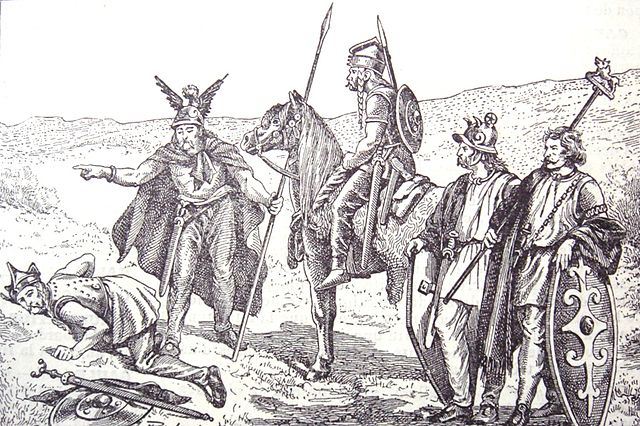
They arrived at the tavern and paid for a nights stay. It was still early, only around ten in the morning. The PCs decided to gather some rumours. Who was this wizard and where was he staying? They soon learned that he was staying in the very inn they now stood, and apparently guarded by seven barbarians. 

The party lingered in the bar around for quite a few hours, hoping to see if the wizard would emerge. Finally the barbarian guards arrived, led by a warrior wearing blue scale mail. The barbarians all floundered to celebrate and toast their leader, a broad shouldered Thalazian named Cratus. The barbarians spent hours drinking, gambling and bantering. Eventually their leader received a lovely meal of roasted quail and honied parsnips. He taste tested the meal for poison and took it upstairs to his ‘master.’ 

The steel was hot! The party finally found their opportunity to strike at the wizard. Cleitus developed a cunning plan. He ordered the barbarians several rounds of wine. After the excessive amount they’d already consumed, several of them began to pass out or vomit. 

Malik and Antifus went upstairs to see what room the wizard might be in, followed by Eos. Soon Cratus came out of a door carrying the dirty tray, and locked it behind him. There was an intense stare down in the hallway between the two Thalazians, but Cratus soon went back downstairs. Eos then tried to pick the lock to the wizards room, but failed. 

Back in the bar the barbarians were a drunken wreck and decided to go to bed. Cratus descended the stairs and Cleitus once again tried his tactic of plying alcohol to his victim. After a couple of rounds of wine Cratus was vomiting through a window, just in time for Eos to come back downstairs and lift the keys from him. 

The stumbling warrior finally decided to go back upstairs to hit the hay. Alas, they heard his cries when he couldn’t find his key chain and began banging on the barbarians door to let him in. Cleitus and Eos ran upstairs to see what the kerfuffle was about. Cratus and two barbarians, drunk and raging, marched off to find their keys. Cleitus figured this was the perfect time to cast his sleep scroll. All three men hit the floor like wet mops. 

This initiated a serious conversation between the characters. Should they drag these men into their room and slit their throats? Could they do that? No, no, they would let them sleep, and instead kill the wizard and flee. 

Using the key Eos opened the door to the wizards room as quietly as he could. Inside a hunched figure worked at a desk, and peering over him was a two-foot tall genderless creature. Eos snuck into the room, grabbed the wizard and quickly slit his throat. Blood pumped all over the assassin, but he sealed his victims mouth to prevent any scream. As soon as the wizard died, the strange grey man atop the table melted like a candle and erupted into flames. Malik and Cleitus rushed into the room and collected the papers strewn about the table. 

They searched but couldn’t find a spell book. After patting down the corpse they felt a mass in the chest. They parted the wizards tunic and saw a terrible tiny grey man growing out of the corpses chest. It clutched the spell book tightly. They snapped off its terrible little arms and collected the book. 

“What the hell do we do now?” Two of the party were covered in blood, there was a weird mutated corpse with its throat slit, and a bizarre melted man on the table. They came up with a plan in record time. They’d frame Cratus, the man paid to guard the wizard. They dragged the sleeping warrior into the room and drooped him over the bloody body, knife in hand. Then they washed up as best they could and fled the inn; though not before Cleitus decided to ‘gift’ Silas the inn-keep twenty gold pieces. 

“We were never here.”

They mounted their horse and rode into the night, a job well done. Alas, they rode so hard they totally lost their bearings. After an hour of riding too and fro they found themselves at a woodland they didn’t recognise. A perfect place to camp? Apparently so. The party set up a series of watches and untethered their bed rolls. 

In the dead of night, two moons gibbous overhead, a terrible mewling was heard by Eos. It was like a barking or shrieking, but definitely not from the mouth of a dog. Eos lit a torch and peered into the wood’s yawning mouth. Eight needle lined maws came rushing out at him. Giant weasels! Brutus the wardog began howling and the party awoke in panic. Dill, the recent hire, ran headlong into the fray but was instantly torn apart by three of the fiends. Confused and dazed the party darted around the campsite swinging at the creatures. The weasels lunged and snapped at their quarry. One was felled, then another, but Eos had one leap on his face slash his eyes.  Then Antifus was surrounded and set upon. Brutus the hound slew one of them, just for another to leap on his haunches and tear out his throat. Defeat seemed imminent, but finally another weasel was crushed below a blade. The remaining creatures fled.

The party started to regroup, wrapping a bandage around Antifus and calculated their losses. 

Dead – Brutus the wardog, Dill, Eos. 

What will they do next? 


Also posted at Dragonsfoot

Spell Books, what are they good for?

Not treasure. 

I was recently pondering how Spell Books make for poor treasure in B/X versions of Dungeons & Dragons. If you are using the Old School Essentials rules to run your game, then you would’ve noticed how captured spell books are effectively useless for low level Magic-users and Elves. 

Why? Well, reading a spell book poses a logistical challenge; first, the character needs to have the spell Read Magic in their repertoire to even attempt it. Then, the character would need to level up, gaining a ‘slot’ in their own book before being able to copy a spell into it. If the character didn’t happen to start the game with Read Magic, none of this is possible until at least third level. I don’t think this is inherently wrong, but it just doesn’t seem to gel with my expectations of wizardry after reading much fantasy fiction. 

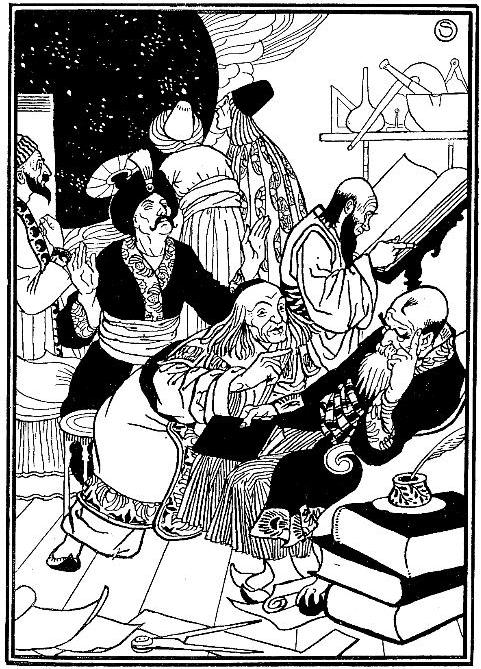
Scribe, by Ephraim Moses Lilien, from Die Bücher der Bibel.

For me, a captured spell book should be a very useful piece of treasure for the budding Magic-user. A method of gaining spells without expensive research, or without submitting to the whims of a mentor; who may or may not offer the spells a player desires. 

  • Magic-users should seek to duel each other, to attain the losers Spell Book. 
  • Magic-users should desire to delve into the tombs of ancient wizard-lords, to gain their powerful grimoires.
  • The glittering towers of high level NPCs should be practically screaming ‘heist me!’ 

Here’s my quick fix to address the ‘Read Magic’ problem. It’s easily solvable, and these solutions mainly come from the Rules Cyclopedia. There isn’t much point bemoaning the merits and pitfalls of different house rules here, I just want to give a simple fix on making captured spell books better treasure, more fun, and more interesting at the table. 

First, we need to insert these rulings and assumptions into our game:

  • Spell Books can contain more spells than the spell limit in the PCs level progression chart. 
  • The maximum number of spells in a book equals the characters Intelligence Statistic. 
  • All Magic-users start with Read Magic, plus one other random spell in their Spell Book. Elves start with only one random spell. 
  • If a Spell Book is lost or destroyed, and no copies have been made, then the Magic-user or Elf can create a new book through magical research, but only containing the spells that they last memorised. 
  • Copying a spell into a Spell Book from a scroll or captured Spell Book costs half the regular cost of magical research and destroys the original page/leaf. 
  • A Magic-user may make copies of their own Spell Book at normal magical research costs, and it does not destroy the page/leaf.
  • Spells of a higher level than the PC is able to cast may be copied into a spell book. 

You might be disagreeing with that last point. Maybe you’re thinking; why would you allow a Magic-user to copy spells into their book they’re unable to cast? Well, it gives them incentive to adventure, they now have their future spell list, they just need to go out and fetch that sweet XP and make it a reality. It also gives the low level Magic-user a reason to sneak into a powerful wizard’s towers, or enter into duels with higher level NPCs. Cunningly swiping a grimoire is a very promising adventure hook now.

Sinbad the sailor and Ali Baba, by William Strang (1859-1921)

With these rules implemented captured Spell Books are far better treasure. Aggression in the magical world is now more common. Wizards are now more paranoid about their books being stolen. All of this helps create a more fun, dynamic game. 

Risky Reading

Having made Spell Books more interesting treasure, I’d like to suggest one other element to temper the hot steel of this brave new world. I’d like to introduce an element of danger to reading a captured Spell Book. After all, there needs to be a little risk with the reward. 

We’re going to achieve this by implementing these rules and assumptions into our game: 

  • As usual, Read Magic is needed to understand the magical cypher script written on scrolls and in Spell Books. 
  • Spell Books have a second defence outside of the script however. It’s contents are written with inaccuracies and blinds to fool the unsuspecting and to protect the knowledge within. These are called curses. All Spell Books have a curse implemented in the body of their text. 
  • Each Magic-user designs his own curse through magical research, and they must be based on their known spells in some way. Naturally, the curse must be approved by the Judge. 
  • Magic-users become more sophisticated at creating, recognising, and avoiding curses as they grow in experience.

So without further ado, here is my totally untested:

Spell Book Curse Procedure

  • When a Magic-user or Elf PC casts Read Magic and reads a captured Spell Book the Judge must determine the highest level spell in the book, and the level of the Magic-User who created it.
  • The player then rolls 2d6. The sum is compared to the matrix below. If the result is equal to, or higher than the required result, then the PCs reading is successful and they understand what spells are within the book. 
  • If successful, the player then rolls their hit dice (HD). If the sum is equal to, or higher than the Spell Book creators level, then they avoid the books curse. 
  • If the 2d6 roll fails, the PC is subject to the curse of the book and doesn’t understand the contents of the book. They may try again after they next level up. 
  • If the hit dice roll fails, then the PC suffers the curse, but still understands what spells are inside the book. 
  • A C marks an automatic failure. 
  • An A marks an automatic success. 

HIGHEST SPELL LEVEL IN BOOK
PC LEVEL123456
16+8+10+12+CC
25+7+9+11+12+C
34+6+8+10+11+12+
43+5+7+9+10+11+
5A4+6+8+9+10+
6A3+5+7+8+9+
7AA4+6+7+8+
8AA3+5+6+7+
9AAA4+5+6+
10AAA3+4+5+
11+AAAA3+4+
Curse Matrix

The Curse

Creating a curse costs the same as magical research and must be somehow linked to a known spell in the PCs repertoire, albeit a weaker but more long-lasting version, or perhaps a reversal of the spells effect. The curse can be removed with the Remove Curse spell, Wish or any other method decided by the Judge. 

from, The Astrologer of the Nineteenth century, 1825

Below are some sample curses. The listed number of each of these curses corresponds to the level of the Magic-user who might have created it. In parenthesis is the spell that it’s based on. 

  1. -2 to AC. (Shield) 
  2. A voice originating from the PC makes mocking comments every hour. This causes extra checks for wandering monsters and gives -1 to all NPC reaction rolls. (Ventriloquism)
  3. Torches and lanterns seem to dim in the PCs presence. Light range is reduced by 10ft in their presence and there is a 1 in 6 chance of light sources being extinguished for ten minutes every hour. (Darkness.)  
  4. Movement speed of the PC becomes 30/10ft. (Hold Person) 
  5. The PC keeps getting static shocks. Save vs death if 5ft from metal, on a fail the PC is hit by an electric shock for 1hp damage. (Lightning bolt.)
  6. Once per hour the PC has a 1 in 6 chance of seeing and hearing visions of hell for ten minutes. During this time they appear catatonic. (Clairvoyance) 
  7. PC becomes a hideous man/beast hybrid and is considered a monster. Charisma score is reduced to 3. (Polymorph self) 
  8. PC is wracked with painful delusions. Intelligence reduced by half, Charisma reduced by half. (Confusion.)
  9. A  demonic force attempts to possess the PC everyday at dusk, save vs spells negates. The demon is always dispelled at dawn, but always attempts to cause chaos. (Magic jar.) 
  10. Monsters always target the PC over any other character. (Charm Monster) 
  11. Every morning 1 cubic foot of stone appears fused to the body of the PC. If not painfully removed (1d6 hp per cubic foot) it will slowly encase their body in a number of days equal to their Constitution Statistic, killing them. (Wall of Stone.) 
  12. Every day the PC becomes more translucent and non corporeal. When the number of days equal the PCs Constitution score they will slide down through the ground one move per day thereafter, eventually passing into the underworld/molten core/hollow world etc. (Pass-Wall.) 
  13. Any corpse within 40ft of the PC has a 1 in 3 chance of animating and attacking them. (Animate Dead.)  
  14. PC experiences the visitation from the astral body of a 10HD Demon Lord. There is a 50% chance of permanent insanity. The Lord has the ability to grant wish, geas, change alignment, and will attempt to force the victim into submission under his yoke. (Contact higher plane.)

Thus ends the rules for making Spell Books better treasure. 

AWFUL INVOCATION OF A SPIRIT. from The Astrologer of the Nineteenth Century, 1825