Not treasure.
I was recently pondering how Spell Books make for poor treasure in B/X versions of Dungeons & Dragons. If you are using the Old School Essentials rules to run your game, then you would’ve noticed how captured spell books are effectively useless for low level Magic-users and Elves.
Why? Well, reading a spell book poses a logistical challenge; first, the character needs to have the spell Read Magic in their repertoire to even attempt it. Then, the character would need to level up, gaining a ‘slot’ in their own book before being able to copy a spell into it. If the character didn’t happen to start the game with Read Magic, none of this is possible until at least third level. I don’t think this is inherently wrong, but it just doesn’t seem to gel with my expectations of wizardry after reading much fantasy fiction.

For me, a captured spell book should be a very useful piece of treasure for the budding Magic-user. A method of gaining spells without expensive research, or without submitting to the whims of a mentor; who may or may not offer the spells a player desires.
- Magic-users should seek to duel each other, to attain the losers Spell Book.
- Magic-users should desire to delve into the tombs of ancient wizard-lords, to gain their powerful grimoires.
- The glittering towers of high level NPCs should be practically screaming ‘heist me!’
Here’s my quick fix to address the ‘Read Magic’ problem. It’s easily solvable, and these solutions mainly come from the Rules Cyclopedia. There isn’t much point bemoaning the merits and pitfalls of different house rules here, I just want to give a simple fix on making captured spell books better treasure, more fun, and more interesting at the table.
First, we need to insert these rulings and assumptions into our game:
- Spell Books can contain more spells than the spell limit in the PCs level progression chart.
- The maximum number of spells in a book equals the characters Intelligence Statistic.
- All Magic-users start with Read Magic, plus one other random spell in their Spell Book. Elves start with only one random spell.
- If a Spell Book is lost or destroyed, and no copies have been made, then the Magic-user or Elf can create a new book through magical research, but only containing the spells that they last memorised.
- Copying a spell into a Spell Book from a scroll or captured Spell Book costs half the regular cost of magical research and destroys the original page/leaf.
- A Magic-user may make copies of their own Spell Book at normal magical research costs, and it does not destroy the page/leaf.
- Spells of a higher level than the PC is able to cast may be copied into a spell book.
You might be disagreeing with that last point. Maybe you’re thinking; why would you allow a Magic-user to copy spells into their book they’re unable to cast? Well, it gives them incentive to adventure, they now have their future spell list, they just need to go out and fetch that sweet XP and make it a reality. It also gives the low level Magic-user a reason to sneak into a powerful wizard’s towers, or enter into duels with higher level NPCs. Cunningly swiping a grimoire is a very promising adventure hook now.
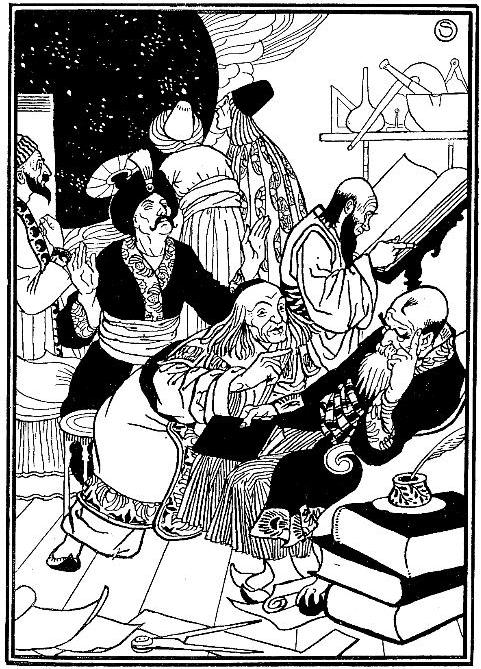
With these rules implemented captured Spell Books are far better treasure. Aggression in the magical world is now more common. Wizards are now more paranoid about their books being stolen. All of this helps create a more fun, dynamic game.
Risky Reading
Having made Spell Books more interesting treasure, I’d like to suggest one other element to temper the hot steel of this brave new world. I’d like to introduce an element of danger to reading a captured Spell Book. After all, there needs to be a little risk with the reward.
We’re going to achieve this by implementing these rules and assumptions into our game:
- As usual, Read Magic is needed to understand the magical cypher script written on scrolls and in Spell Books.
- Spell Books have a second defence outside of the script however. It’s contents are written with inaccuracies and blinds to fool the unsuspecting and to protect the knowledge within. These are called curses. All Spell Books have a curse implemented in the body of their text.
- Each Magic-user designs his own curse through magical research, and they must be based on their known spells in some way. Naturally, the curse must be approved by the Judge.
- Magic-users become more sophisticated at creating, recognising, and avoiding curses as they grow in experience.
So without further ado, here is my totally untested:
Spell Book Curse Procedure
- When a Magic-user or Elf PC casts Read Magic and reads a captured Spell Book the Judge must determine the highest level spell in the book, and the level of the Magic-User who created it.
- The player then rolls 2d6. The sum is compared to the matrix below. If the result is equal to, or higher than the required result, then the PCs reading is successful and they understand what spells are within the book.
- If successful, the player then rolls their hit dice (HD). If the sum is equal to, or higher than the Spell Book creators level, then they avoid the books curse.
- If the 2d6 roll fails, the PC is subject to the curse of the book and doesn’t understand the contents of the book. They may try again after they next level up.
- If the hit dice roll fails, then the PC suffers the curse, but still understands what spells are inside the book.
- A C marks an automatic failure.
- An A marks an automatic success.
| HIGHEST SPELL LEVEL IN BOOK | ||||||
| PC LEVEL | 1 | 2 | 3 | 4 | 5 | 6 |
| 1 | 6+ | 8+ | 10+ | 12+ | C | C |
| 2 | 5+ | 7+ | 9+ | 11+ | 12+ | C |
| 3 | 4+ | 6+ | 8+ | 10+ | 11+ | 12+ |
| 4 | 3+ | 5+ | 7+ | 9+ | 10+ | 11+ |
| 5 | A | 4+ | 6+ | 8+ | 9+ | 10+ |
| 6 | A | 3+ | 5+ | 7+ | 8+ | 9+ |
| 7 | A | A | 4+ | 6+ | 7+ | 8+ |
| 8 | A | A | 3+ | 5+ | 6+ | 7+ |
| 9 | A | A | A | 4+ | 5+ | 6+ |
| 10 | A | A | A | 3+ | 4+ | 5+ |
| 11+ | A | A | A | A | 3+ | 4+ |
The Curse
Creating a curse costs the same as magical research and must be somehow linked to a known spell in the PCs repertoire, albeit a weaker but more long-lasting version, or perhaps a reversal of the spells effect. The curse can be removed with the Remove Curse spell, Wish or any other method decided by the Judge.

Below are some sample curses. The listed number of each of these curses corresponds to the level of the Magic-user who might have created it. In parenthesis is the spell that it’s based on.
- -2 to AC. (Shield)
- A voice originating from the PC makes mocking comments every hour. This causes extra checks for wandering monsters and gives -1 to all NPC reaction rolls. (Ventriloquism)
- Torches and lanterns seem to dim in the PCs presence. Light range is reduced by 10ft in their presence and there is a 1 in 6 chance of light sources being extinguished for ten minutes every hour. (Darkness.)
- Movement speed of the PC becomes 30/10ft. (Hold Person)
- The PC keeps getting static shocks. Save vs death if 5ft from metal, on a fail the PC is hit by an electric shock for 1hp damage. (Lightning bolt.)
- Once per hour the PC has a 1 in 6 chance of seeing and hearing visions of hell for ten minutes. During this time they appear catatonic. (Clairvoyance)
- PC becomes a hideous man/beast hybrid and is considered a monster. Charisma score is reduced to 3. (Polymorph self)
- PC is wracked with painful delusions. Intelligence reduced by half, Charisma reduced by half. (Confusion.)
- A demonic force attempts to possess the PC everyday at dusk, save vs spells negates. The demon is always dispelled at dawn, but always attempts to cause chaos. (Magic jar.)
- Monsters always target the PC over any other character. (Charm Monster)
- Every morning 1 cubic foot of stone appears fused to the body of the PC. If not painfully removed (1d6 hp per cubic foot) it will slowly encase their body in a number of days equal to their Constitution Statistic, killing them. (Wall of Stone.)
- Every day the PC becomes more translucent and non corporeal. When the number of days equal the PCs Constitution score they will slide down through the ground one move per day thereafter, eventually passing into the underworld/molten core/hollow world etc. (Pass-Wall.)
- Any corpse within 40ft of the PC has a 1 in 3 chance of animating and attacking them. (Animate Dead.)
- PC experiences the visitation from the astral body of a 10HD Demon Lord. There is a 50% chance of permanent insanity. The Lord has the ability to grant wish, geas, change alignment, and will attempt to force the victim into submission under his yoke. (Contact higher plane.)
Thus ends the rules for making Spell Books better treasure.

 Dreadlord Games